
JUNE SESSION: SPEAKER BIOGRAPHIES
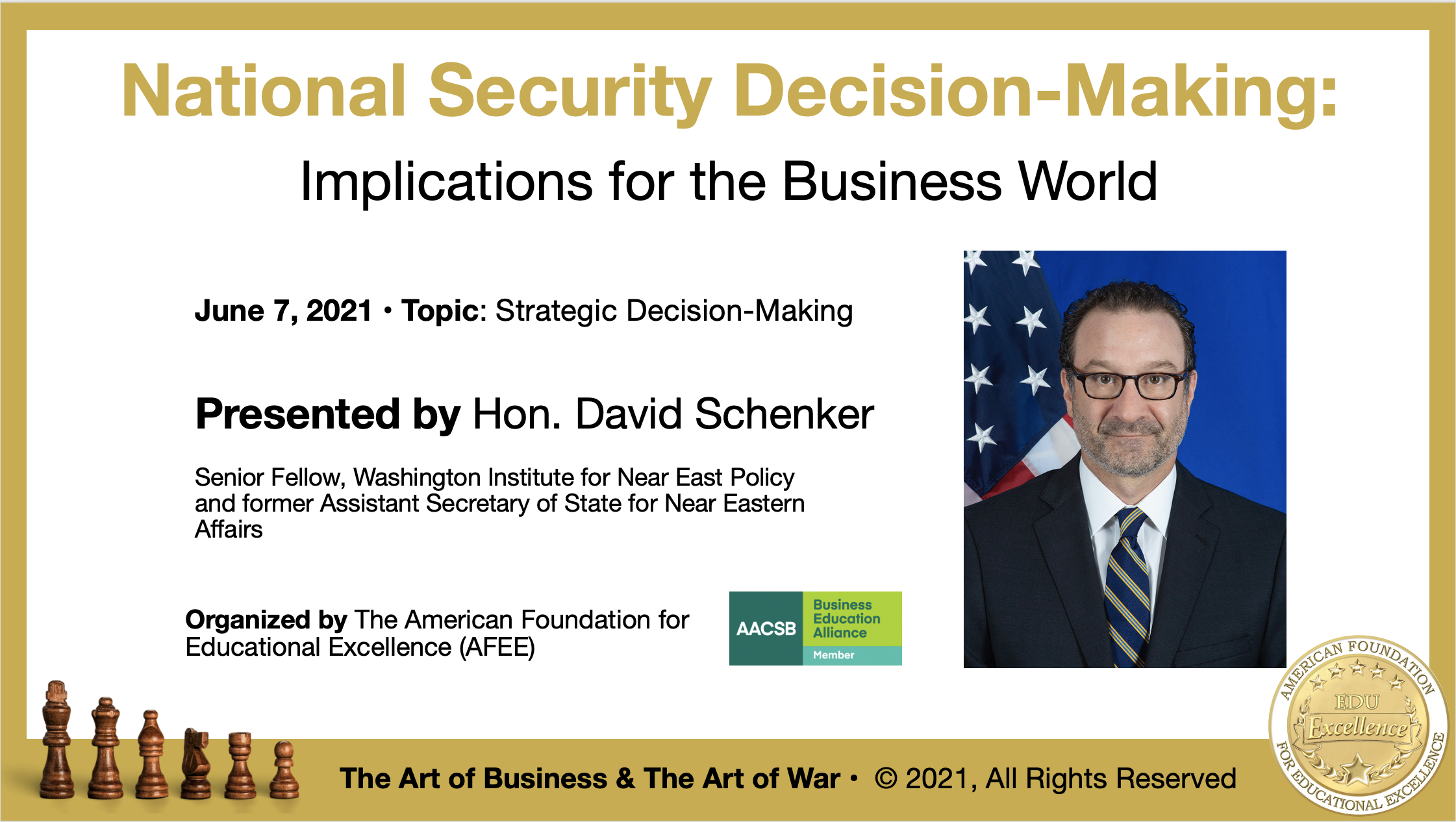
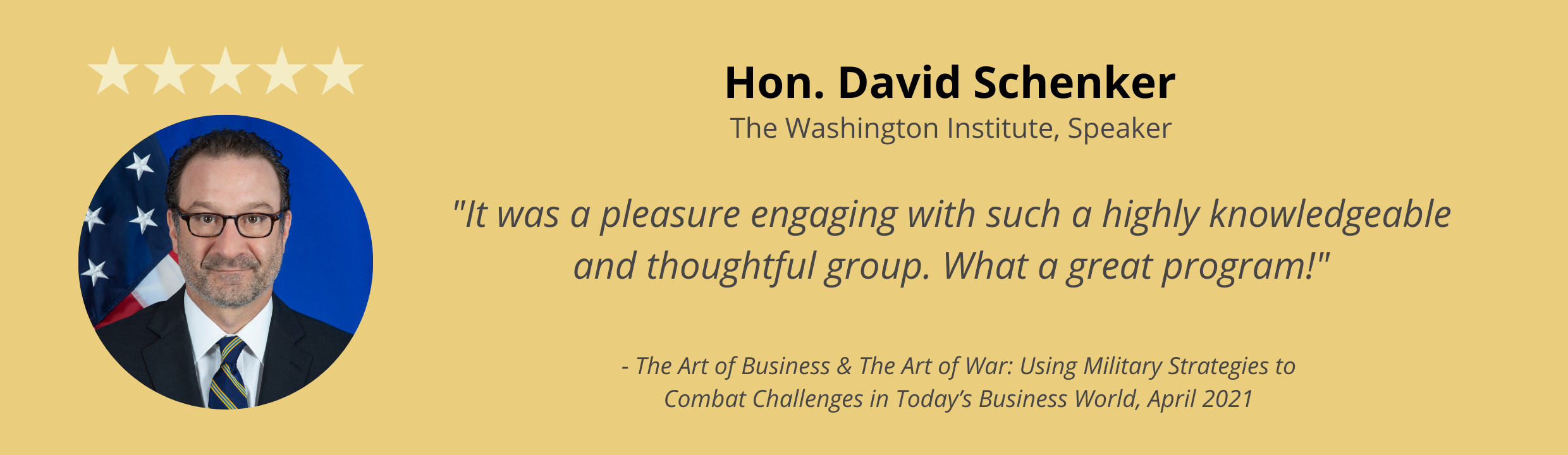
Biography: David Schenker is a Senior Fellow at The Washington Institute. Confirmed by the Senate on June 5, 2019, he served as Assistant Secretary of State for Near Eastern Affairs through January 2021. In that capacity, he was the principal Middle East advisor to the secretary of state and the senior official overseeing the conduct of U.S. policy and diplomacy in a region stretching from Morocco to Iran to Yemen, with responsibility for eighteen countries, the Palestinian Authority, and Western Sahara. He also supervised more than 9,000 staff and administered an annual budget in excess of $7 billion.
In policy terms, he led the bureau’s efforts to advance American interests abroad and strengthen U.S. partnerships and alliances across the region. Via diplomacy and the effective allocation of resources and assistance—as well as through imposition of sanctions—he worked to promote human rights, deter terrorism, fight corruption, and push back against regional adversaries. In addition to developing and implementing the U.S. strategy on China in the region, he worked to heal the Gulf rift between Qatar and neighboring states, resolve intractable conflicts in Libya and Yemen, consolidate the Abraham Accords, and counter malign Iranian influence in the Middle East.
Prior to joining the State Department, Schenker worked as a Fellow and director of the Program on Arab Politics at The Washington Institute from 2006 to 2019. During that period, he authored dozens of op-eds, journal articles, and PolicyWatches about Jordan, Lebanon, Hezbollah, and Egypt, among other topics, and contributed chapters to Institute monographs.
Previously, from 2002 to 2006, Schenker served in the Office of the Secretary of Defense as Levant country director, the Pentagon’s top policy aide on the Arab nations of the Levant. In that capacity, he advised the secretary and other senior Pentagon leadership on the military and political affairs of Syria, Lebanon, Jordan, and the Palestinian territories. He was awarded the Office of the Secretary of Defense Medal for Exceptional Civilian Service in 2005.
M.A., University of Michigan; Certificate, Center for Arabic Study Abroad (CASA), American University in Cairo;
B.A., University of Vermont
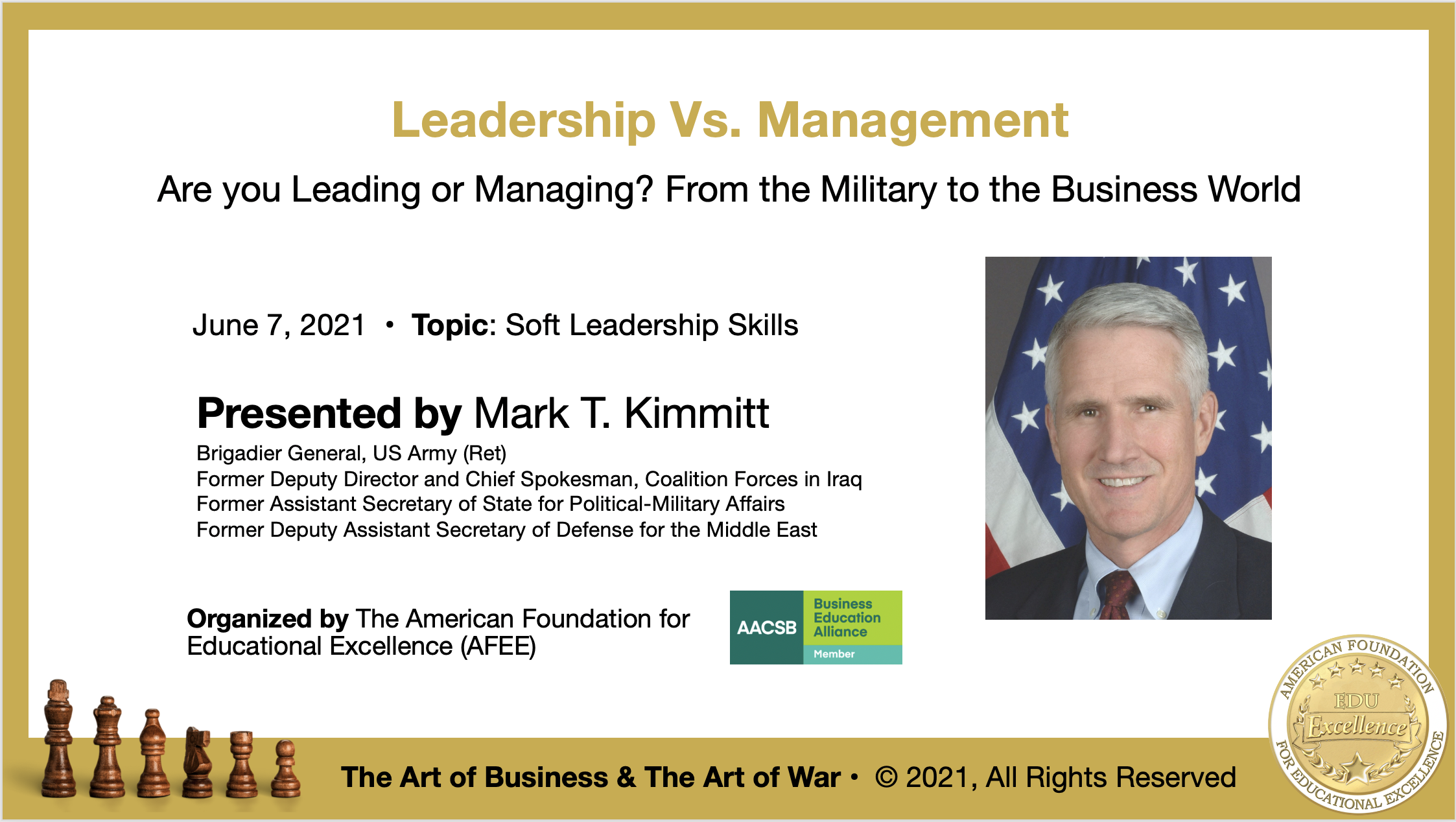
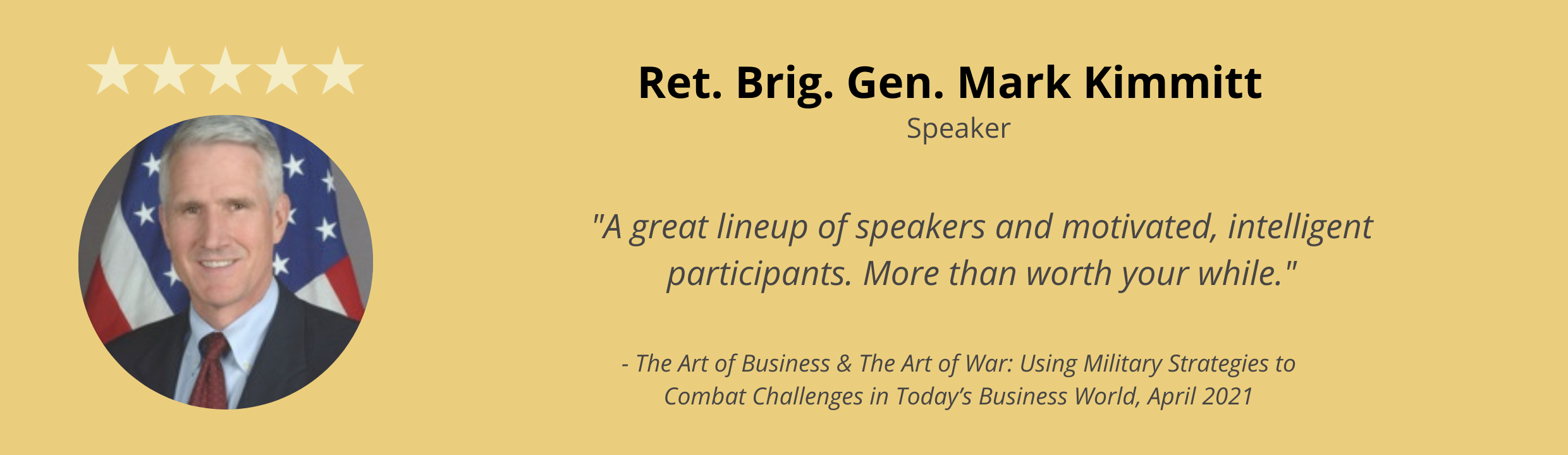
Biography: Brigadier General Mark T. Kimmitt, USA (Ret.) served as Assistant Secretary of State for Political-Military Affairs from 2008 to 2009. In that capacity, he was responsible for State Department political-military policy, with particular emphasis on security assistance and sales of arms around the world, as well as serving as the primary liaison between the Departments of State and Defense. He was also instrumental in recent counter-piracy operations off the coast of Somalia, and negotiated the groundbreaking arrangements for the prosecution of pirates abroad.
From 2006 to 2008, Kimmitt served as the Deputy Assistant Secretary of Defense for Middle East Policy, responsible for defense policy development, planning, guidance and oversight for the region. He was involved in every key defense deliberation during that period, to include the change in U.S. strategy for Iraq in 2006, participating in the Status of Forces negotiations with Iraq and leading DOD efforts to enhance security in the Middle East through the Gulf Security Dialogue.
Kimmitt served for over 30 years as an officer in the United States Army in a wide variety of command, operational, and policy positions with extensive operational experience abroad before retiring with the rank of Brigadier General in 2006. His assignments included Deputy Director of Strategy and Plans at United States Central Command from 2004 to 2006 and Deputy Director of Operations and Chief Military Spokesman for Coalition Forces in Iraq in 2003 and 2004. He has led soldiers and paratroopers at every level of command in the artillery.
Kimmitt is a graduate of the United States Military Academy. He holds a Masters Degree (with Distinction) from Harvard Business School. He also earned Masters from the School of Advanced Military Studies and the National Defense University, and a professional certification as a Chartered Financial Analyst (CFA). He also served as Assistant Professor of Finance and Economics in the Department of Social Sciences at the United States Military Academy.
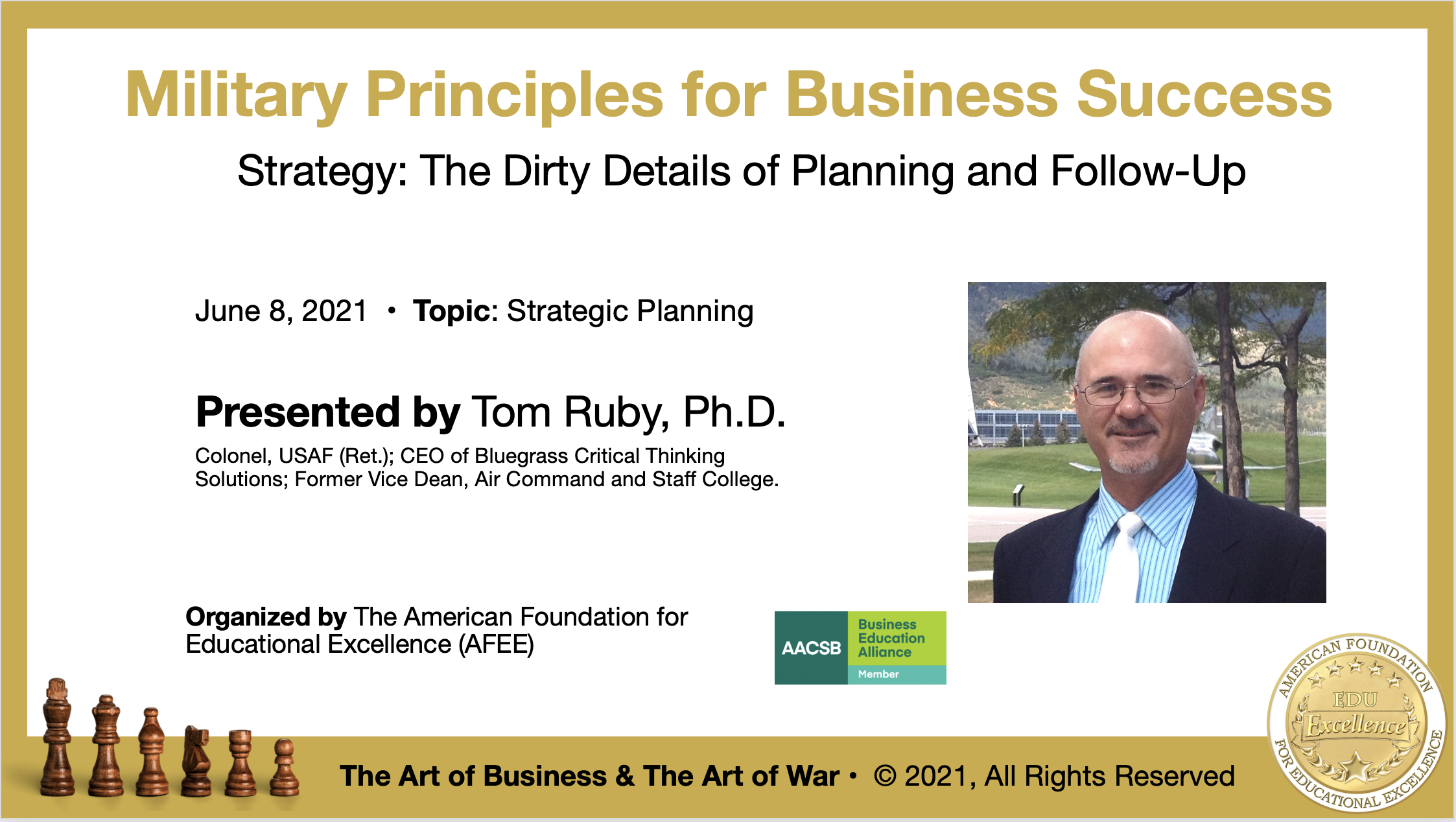
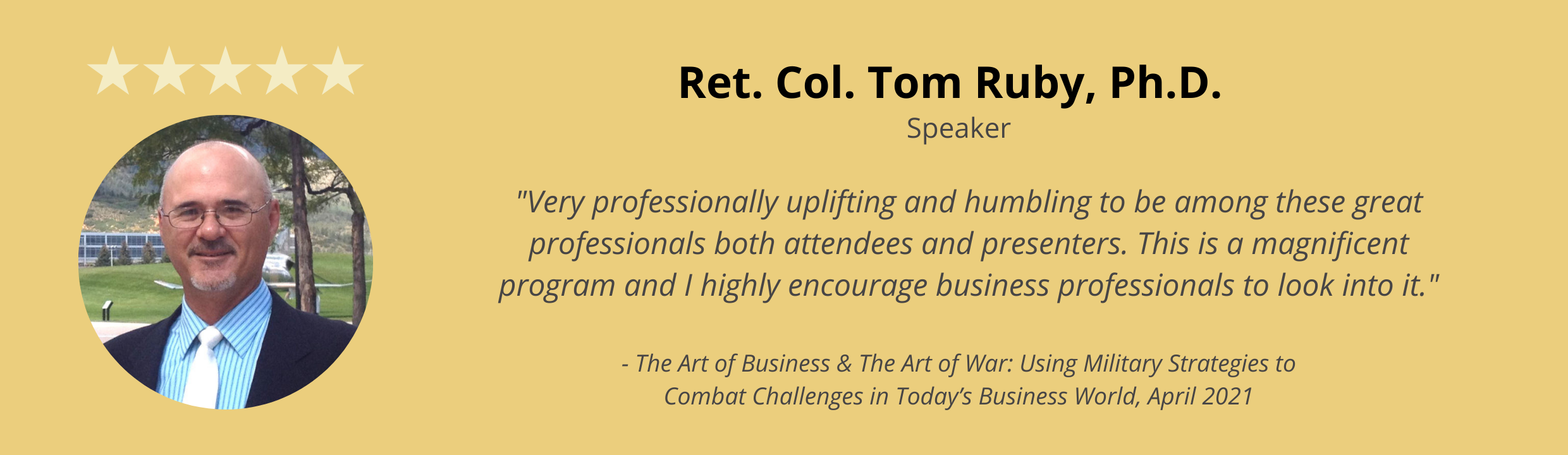
Biography: Tom Ruby is a retired Air Force Colonel who served 26 years on active duty in positions from Squadron Intelligence Officer, to Chief of Doctrine for the AF ISR Enterprise, to Chief of Special Programs for the Air Force Materiel Command. He was Associate Dean of the Air Command and Staff College where he developed exchange programs with the NATO School, the French École Militaire, the German General Staff College and Poland’s National Defense University. He served on General Petraeus’ Joint Strategic Assessment Team as well as in three combat deployments. He holds a PhD in Political Science from the University of Kentucky, and actively mentors graduate students through the American Political Science Association. He is widely published and speaks globally on topics from critical thinking, to leadership, to strategy, to morality in warfare. He is currently CEO of Bluegrass Critical Thinking Solutions, a business and Defense consulting firm.
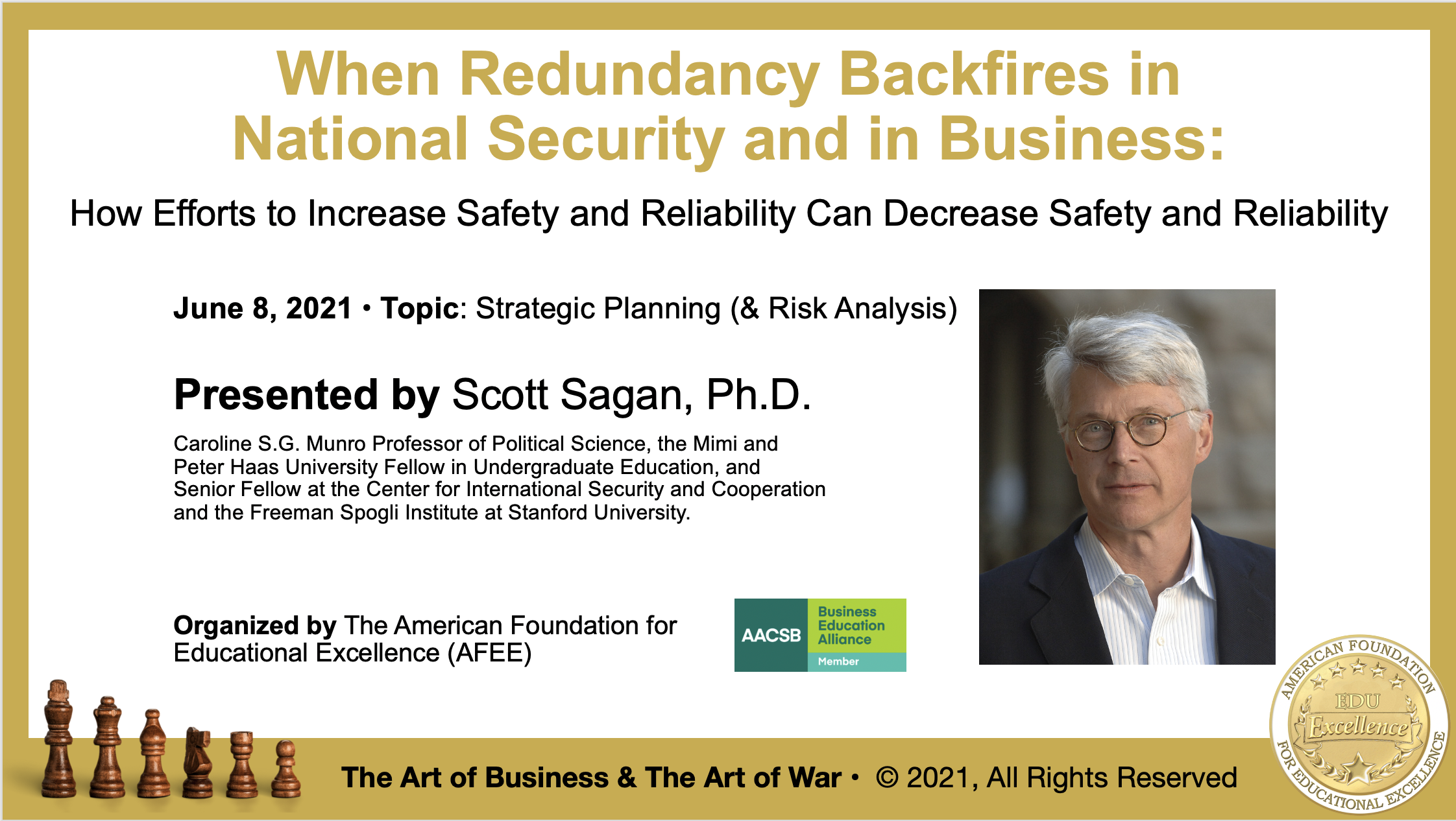
Biography: Scott D. Sagan is the Caroline S.G. Munro Professor of Political Science, the Mimi and Peter Haas University Fellow in Undergraduate Education, and Senior Fellow at the Center for International Security and Cooperation and the Freeman Spogli Institute at Stanford University. He also serves as Chairman of the American Academy of Arts and Sciences’ Committee on International Security Studies. Before joining the Stanford faculty, Sagan was a lecturer in the Department of Government at Harvard University and served as special assistant to the director of the Organization of the Joint Chiefs of Staff in the Pentagon. Sagan has also served as a consultant to the office of the Secretary of Defense and at the Sandia National Laboratory and the Los Alamos National Laboratory.
Sagan is the author of a number of publications, among which is Moving Targets: Nuclear Strategy and National Security (Princeton University Press, 1989). He is the co-editor of Learning from a Disaster: Improving Nuclear Safety and Security after Fukushima (Stanford University Press, 2016) and co-editor of Insider Threats (Cornell University Press, 2017). Sagan was also the guest editor of a two-volume special issue of Daedalus: Ethics, Technology, and War (Fall 2016) and The Changing Rules of War (Winter 2017).
Recent publications include “Does the Noncombatant Immunity Norm Have Stopping Power?” with Benjamin A. Valentino in International Security (Fall 2020); “Weighing Lives in War: How National Identity Influences American Public Opinion about Foreign Civilian and Compatriot Fatalities” also with Benjamin A. Valentino in the Journal of Global Security Studies (December 2019).
In 2018, Sagan received the Andrew Carnegie Fellowship from the Carnegie Corporation of New York. In 2017, he received the International Studies Association’s Susan Strange Award which recognizes the scholar whose “singular intellect, assertiveness, and insight most challenge conventional wisdom and intellectual and organizational complacency” in the international studies community. In 2013, Sagan received the International Studies Association’s International Security Studies Section Distinguished Scholar Award. He has also won four teaching awards: among them, Stanford’s 1998-99 Dean’s Award for Distinguished Teaching and the Monterey Institute for International Studies’ Nonproliferation Education Award in 2009.
His Research Interests: Nuclear strategy | Ethics and war | Public opinion about the use of force | Nuclear non-proliferation and arms control | Safety of hazardous technology.
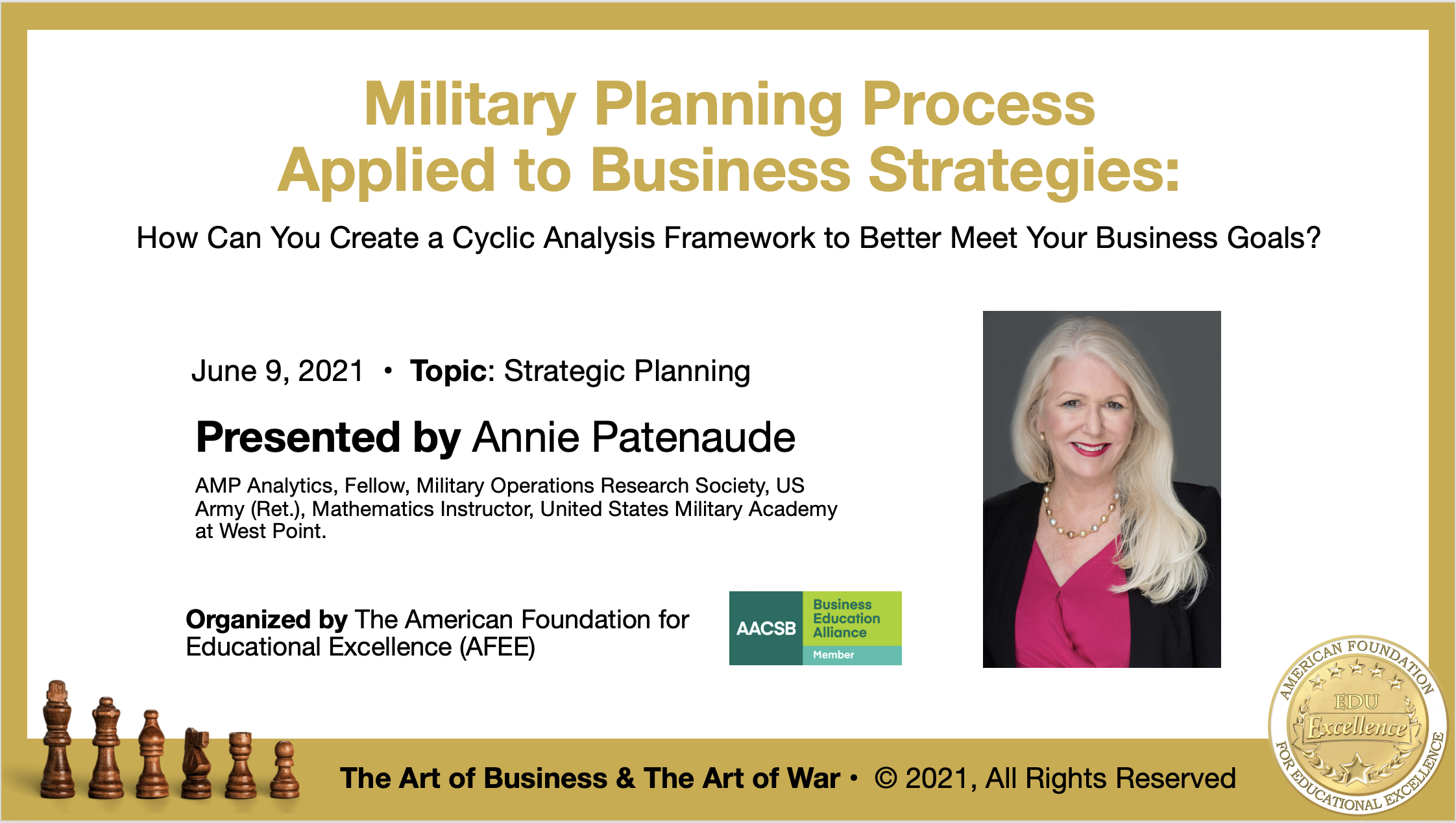
Biography: Annie Patenaude is a retired Army Field Artillery Officer and Mathematician. After her initial Army operational assignments, Annie taught Mathematics at West Point and served in Operations Research positions in the Pentagon. She is a Fellow of the Military Operations Research Society and Director of Operations for the Interservice/Industry Training, Simulation, and Education Conference.
Annie’s other work experience includes:
- Director of Modeling and Simulation Policy support to several offices in the Pentagon.
- Northrop Grumman Executive Account Manager, and later Strategic Plans and Programs.
- Director of the Joint Assessment and Enabling Capability in the Office of the Deputy Under Secretary of Defense (Readiness).
- Principal in Booz Allen Hamilton.
Currently, Annie works through AMP Analytics as an independent consultant to small businesses and Federally Funded Research and Development Centers, supporting Army, Navy, Homeland Defense, and Department of Defense clients in studies and analysis including strategic planning, enterprise M&S solutions, and operations research analysis.
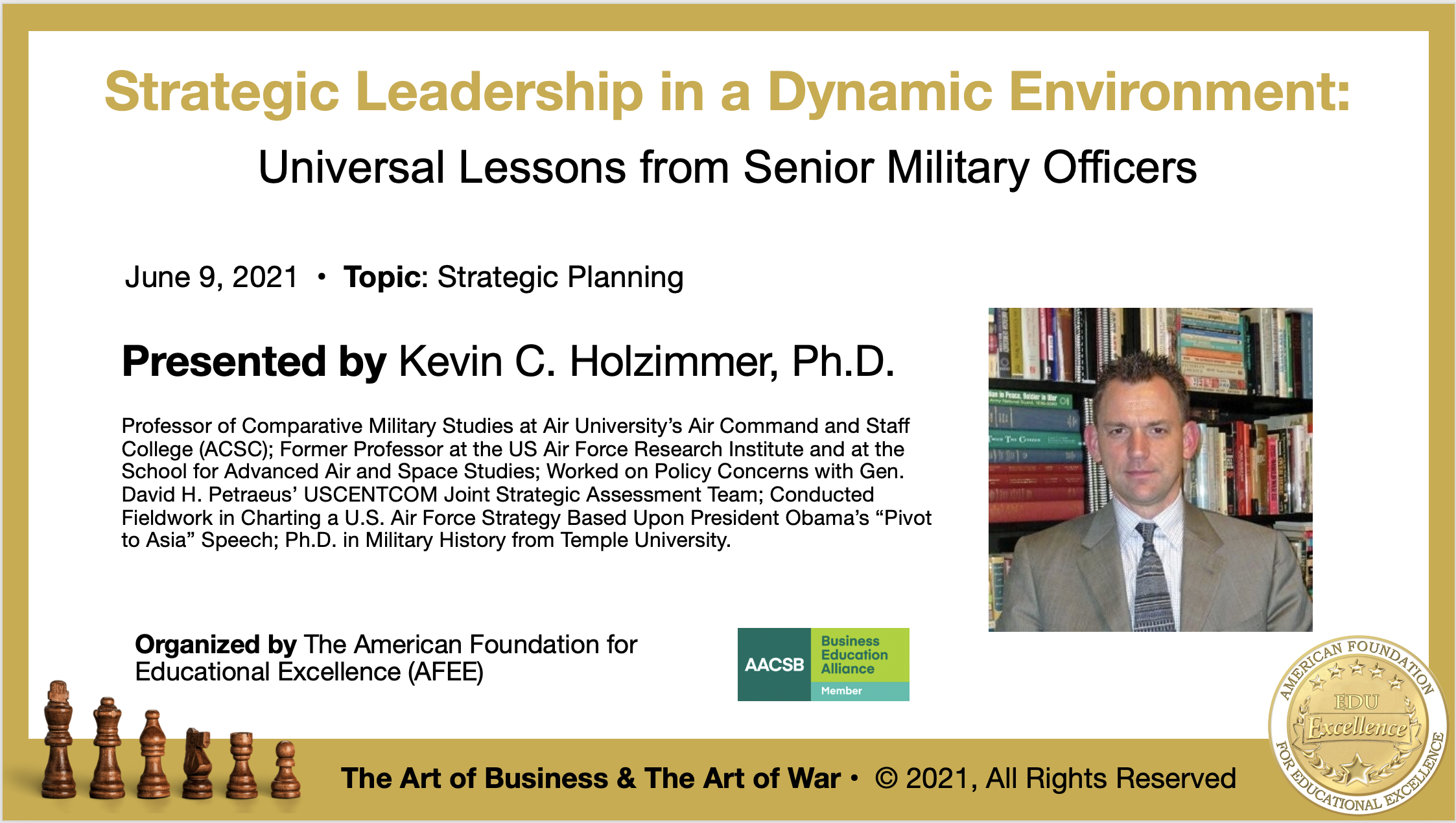
Biography: Dr. Kevin C. Holzimmer is Professor of Comparative Military Studies at Air University’s Air Command and Staff College (ACSC). Before his current position at ACSC, he was a research professor at the USAF Air Force Research Institute and taught at the School for Advanced Air and Space Studies. Dr. Holzimmer has published numerous journal articles and book chapters on World War II in the Pacific, including General Walter Krueger: Unsung Hero of the Pacific War (University Press of Kansas). He is currently working on a book-length project that examines how the air, land, and sea commanders forged an effective joint team that successfully fought the Japanese in Douglas MacArthur’s Southwest Pacific Area. In addition to his academic pursuits, Dr. Holzimmer has worked on recent policy concerns, first with Gen. David H. Petraeus’ USCENTCOM Joint Strategic Assessment Team (9 October 2008- February 2009) and most recently conducting fieldwork in charting a U.S. Air Force strategy based upon President Obama’s famous “pivot to Asia” speech. He holds a Ph.D. in Military History from Temple University.
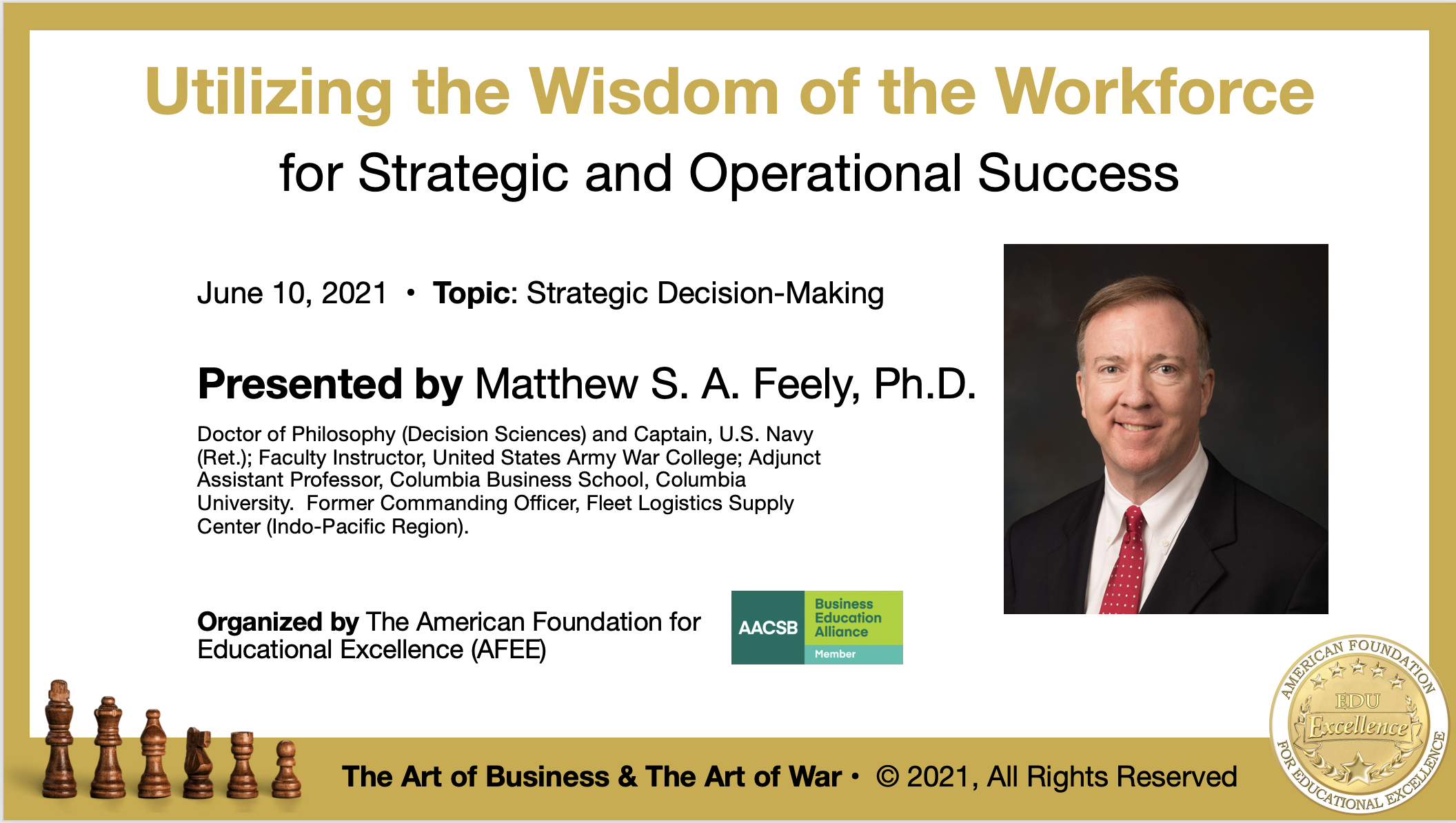
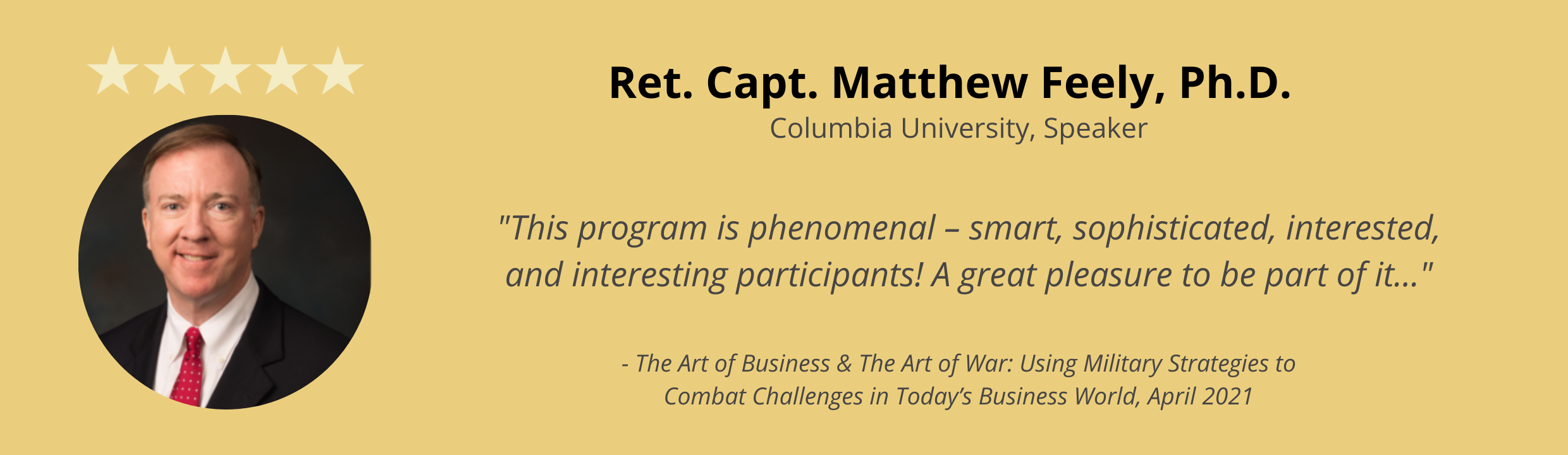
Biography: Matthew S. A. Feely joined the faculty at the Columbia Business School in May 2013, teaching strategic leadership and leadership decision-making to emerging leaders in the MBA and Executive MBA programs as well as to senior executives in the Crisis Leadership Executive Program and Advanced Management Program. Matt is also a faculty instructor at the United States Army War College where he leads two, year-long seminars of senior military officers in graduate studies to help them emerge as the next generation of strategic thinkers and leaders, applying their craft in a volatile, uncertain, complex and ambiguous world. His work in the classroom and lecture halls exemplifies a fusion of theoretical knowledge with practical experience gained from a robust scholarship coupled with a three decade-long navy career and recent problem solving work he has done on behalf of the private sector, the United States defense establishment and political campaigns. Matt’s case study about his experiences leading relief operations after the Great East Japan Earthquake earned the distinction of being the first Columbia University case study ever to be published as a paper case and as a multi-media case study.
Matt earned a B.S. at the U.S. Naval Academy, an MBA at the Wharton School and a Ph.D. in Decision Sciences at the Wharton School’s Center for Risk Management and Decision Processes and the Center for Energy and the Environment, University of Pennsylvania. He is also a distinguished graduate of the National Defense University.
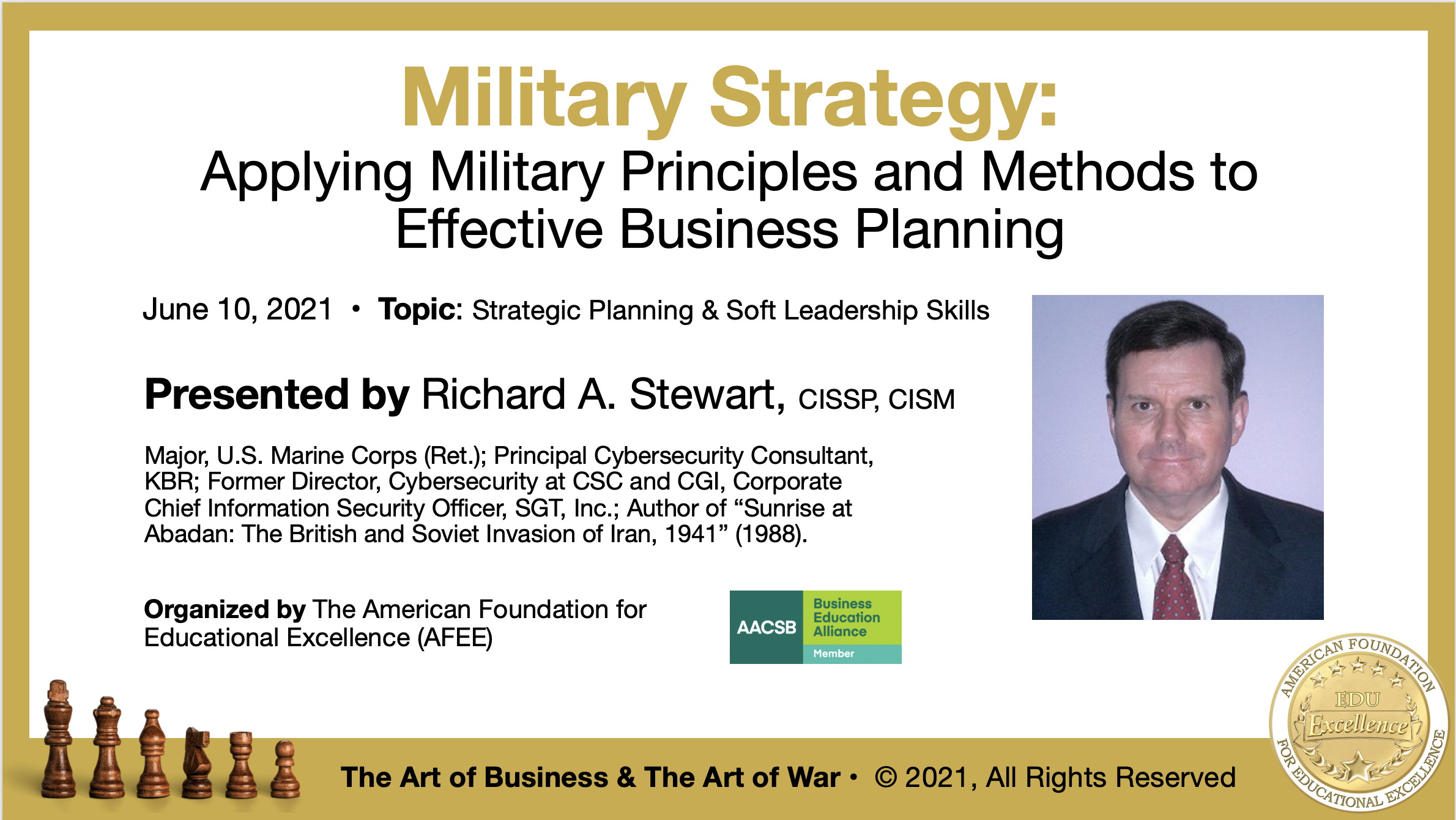
Biography: Major Rick Stewart is a retired Marine Corps officer, a former Corporate Cybersecurity Executive and is currently a Principal Consulting Engineer to the Federal Government. A graduate of the U.S. Naval Academy, he holds Masters Degrees in National Security Studies from Georgetown University and Public Administration from Pepperdine University. Rick is the author of more than 20 professional articles and the book “Sunrise at Abadan” selected by Choice Magazine as one of the Outstanding Scholarly Books of 1989.
During his Marine Corps career, Major Stewart served as a Communications, Signals Intelligence and Electronic Warfare Officer in various command and staff positions. He supported the evacuation of Saigon in 1975, participated in Exercise Bright Star II in Egypt in 1981, and twice supported preparations and planning for interventions in Haiti. He developed the Marine Corps concept paper for its Light Armored Vehicle program and composed congressional testimony that obtained program funding. He also served as an advisor to and Acquisition Project Officer on the Light Armored Vehicle program. His vital efforts helped provide the Marine Corps with a critical armored mobility capability that proved crucial to successful Marine Corps operations in Panama, Somalia and in both Gulf Wars. Today the Marine Corps is eliminating its tank units and the Light Armored Vehicle will become its primary armored combat vehicle.
Major Stewart brought his military leadership, system acquisition and technical experience into the U.S. corporate world where he has worked in Cybersecurity, Program Management and Sales. He has held Director level positions for large IT service corporations. Throughout his career in the IT industry, he has used his military experience to implement innovation, high professional standards and business practice excellence. He was awarded two prestigious corporate level awards for Excellence. His CSC Global Cybersecurity Sales Operations team achieved an unprecedented new business win rate of almost 80%. He provided cybersecurity consulting support to the National Institute of Standards and Technology (NIST) in developing the President’s Cybersecurity Framework for Critical Infrastructure. Major Stewart currently works for KBR, Inc.’s Government Solutions business unit as a Principal Cybersecurity Engineering Consultant providing cybersecurity engineering services to the Department of Transportation.
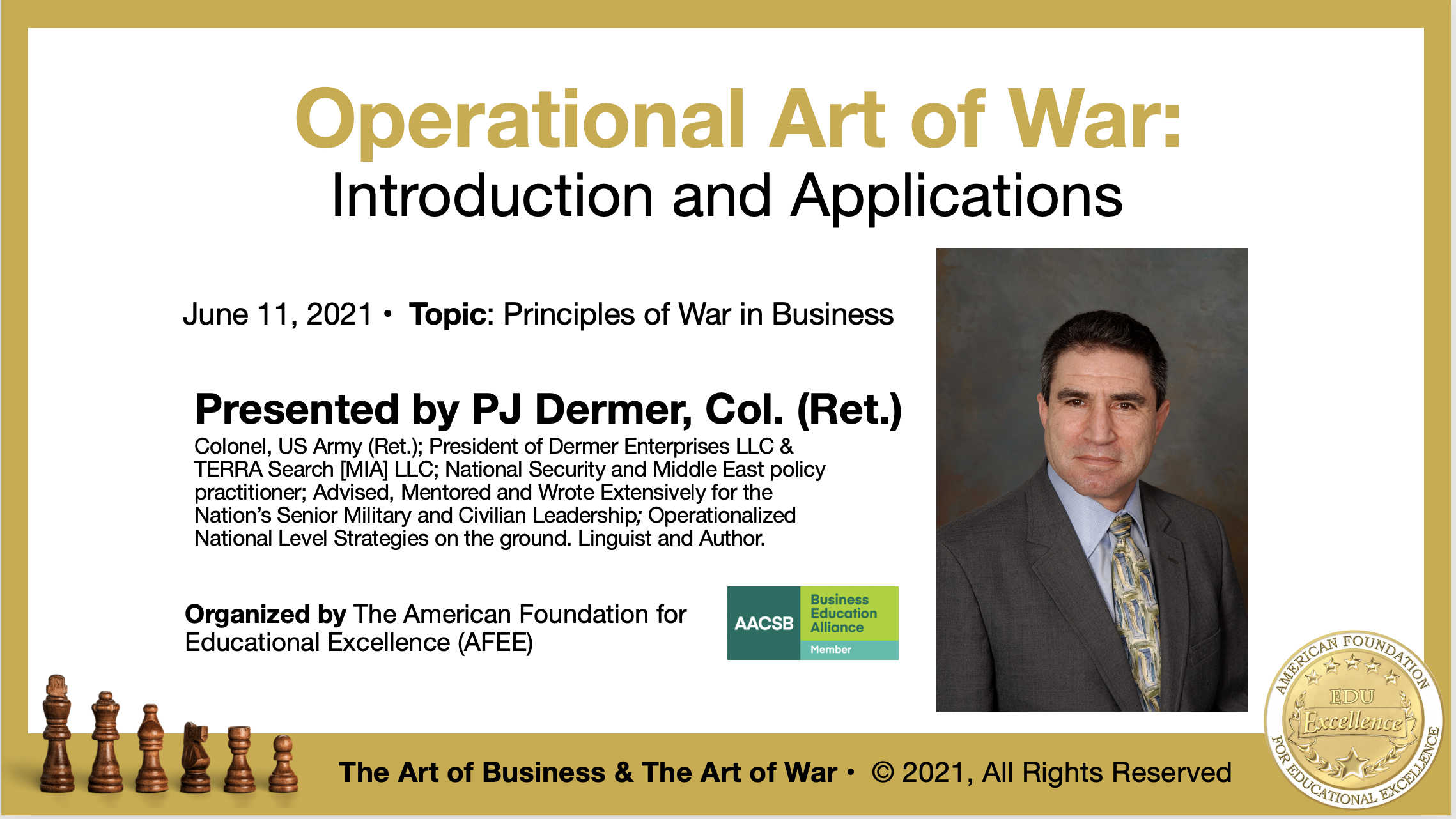
Biography: Colonel (retired) P.J. Dermer is one of the Army’s foremost Middle East regional experts. His career spanned over 30 years of experience. It includes military and civilian arenas spread over a wealth and breadth of challenging spectrums including national levels of the U.S. government and vital international venues. He has extensive coalition-building experience working with international counterparts to foster the Middle East Peace Process as well as the rebuilding of Iraq’s critical national security institutions. He has advised, mentored and written extensively for the nation’s senior military and civilian leadership. In the conduct of his duties, Colonel Dermer had the unique opportunity to operationalize national level strategy on the ground in the Middle East’s extremely complicated social, cultural and religious environment. Countries of expertise include Israel, Lebanon, Syria, Egypt, Iraq, North Africa and the Persian Gulf.
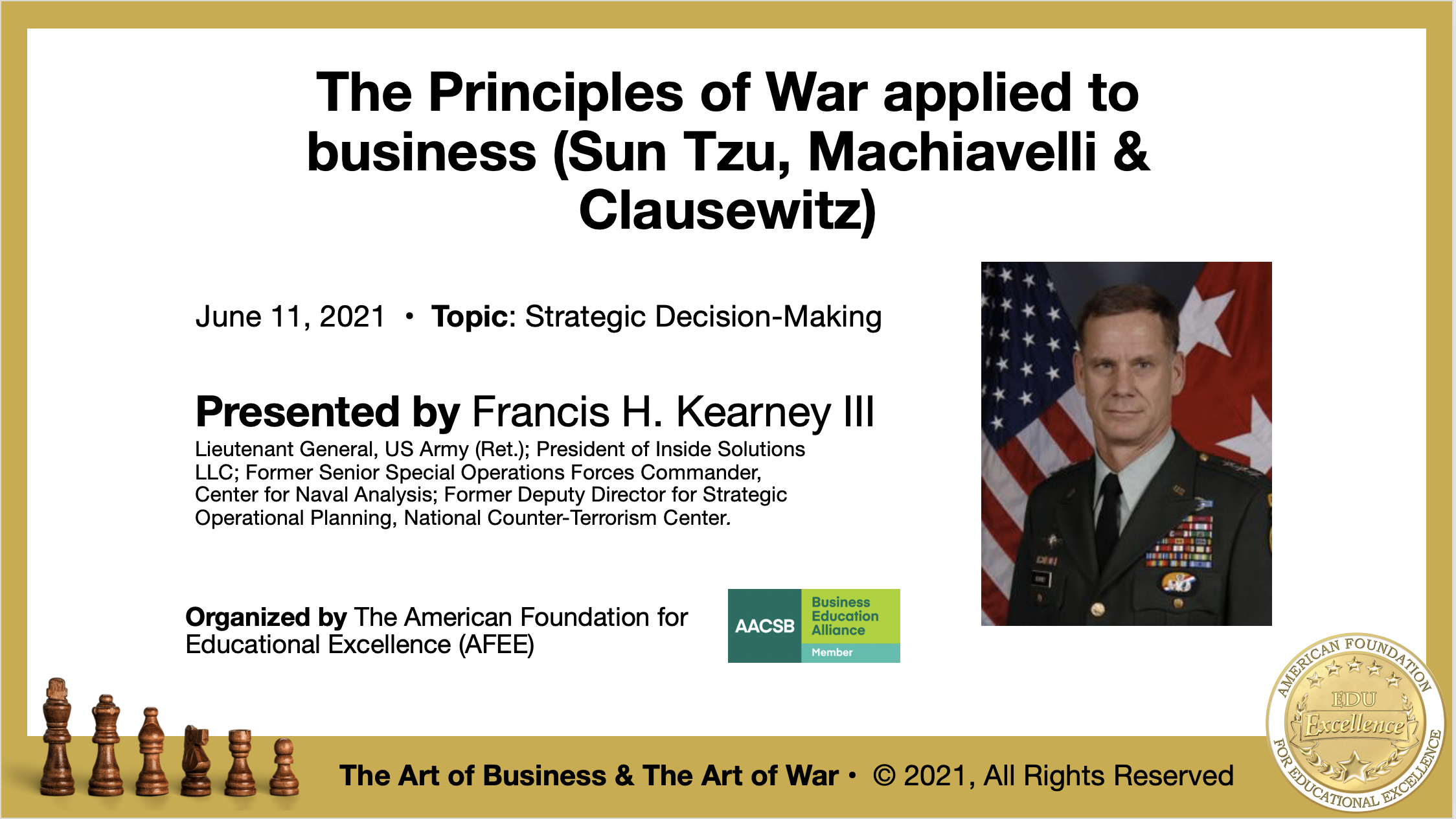
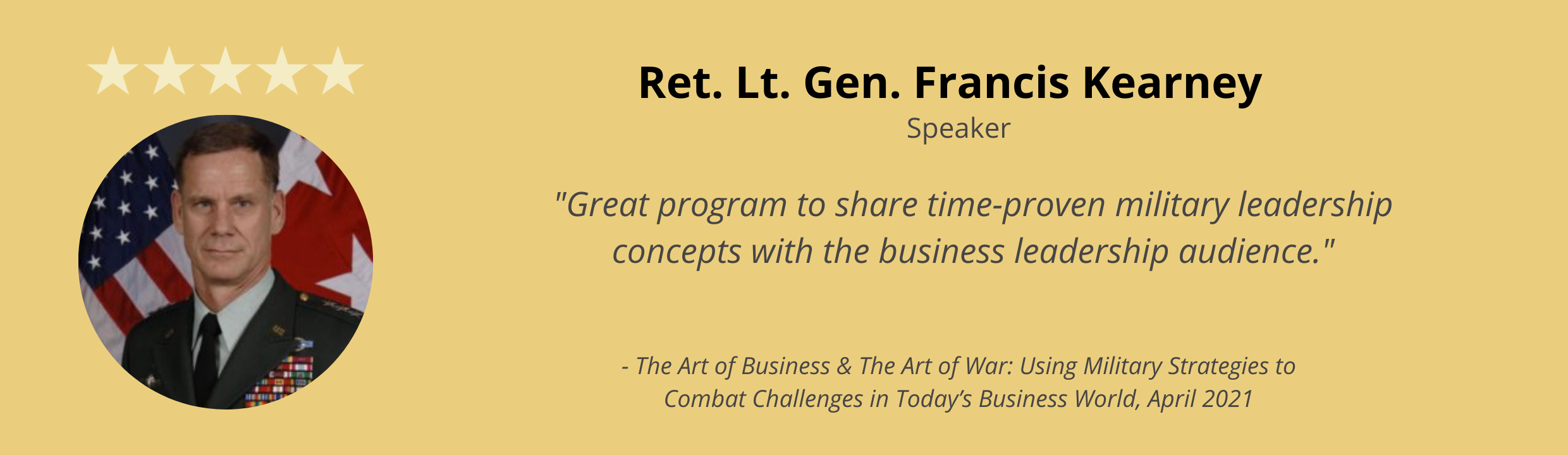
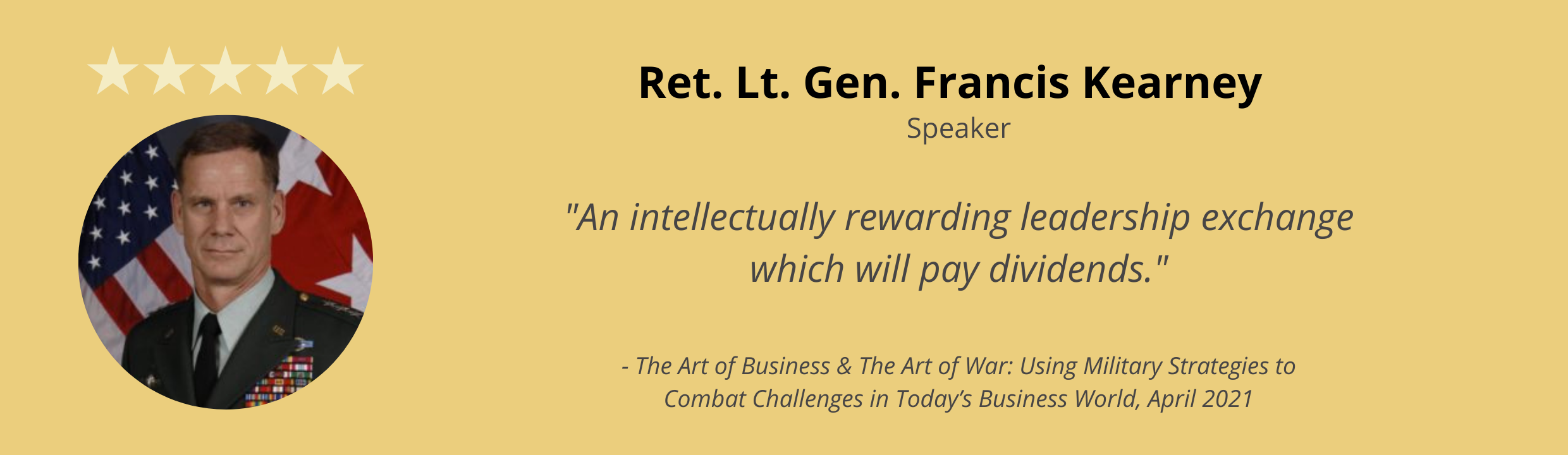
Biography: Lieutenant General Frank Kearney retired on 1 January 2012 from the United States Army after more than 35 years of service. His final active duty assignment was Deputy Director for Strategic Operational Planning at the National Counter-Terrorism Center in Washington DC. General Kearney now serves as the President of his own consulting company, Inside-Solutions-LLC, focusing on leader development in organizations. Most recently he served as the Interim CEO and President of Draper Laboratories in Cambridge, MA from March to mid October 2020.
He works routinely with Thayer Leadership at the Thayer Hotel at West Point, NY and with military and corporate groups to assist in improving organizational performance through leader development. In this capacity, he has worked with leaders in 7-11, Deloitte, Mercedes-Benz USA, General Electric, USAA, Morgan Stanley, and many others.
General Kearney serves as a Distinguished Faculty Member of the Joint Special Operations University and as a mentor to the Department of State Foreign Service Institute in Washington DC. He is a Senior Special Operations Fellow at the Center for Naval Analysis in Washington DC.
General Kearney's most recent assignments at the strategic and operational levels focused on Special Operations and Counter-Terrorism. He planned and participated in the opening campaigns of Operation Enduring Freedom in Afghanistan and Operation Iraqi Freedom in Iraq and commanded all Theater Special Operations forces in the middle-east from March 2005 to June 2007. General Kearney also served as the Deputy Combatant Commander for United States Special Operations Command (SOCOM) from 2007-2010 and insured that the 62,000 operators of this command were properly trained and equipped for their global special operations' missions. General Kearney oversaw the SOCOM requirements process, the execution of a 10 billion dollar budget and led the SOCOM Quadrennial Defense Review (QDR) team.
General Kearney also sat on the DOD Ballistic Missile Defense Review Committee and the Deputy Secretary of Defense’s Advisory Working Group managing the Defense Department’s annual budget approval and execution. Finally, at the National Counter-Terrorism Center, General Kearney worked with 16-29 different cabinet level agencies in the US government to plan and coordinate the whole of government efforts to achieve the goals of the Obama Administration’s Counter-Terrorism strategy.