USJ-LEB-AFEE International Academy (ULAIA)
for Lebanese and Middle Eastern Studies
Fostering In-Depth Knowledge and Diplomatic Expertise on Lebanon and the Middle East
EXECUTIVE EDUCATION
AFEE in partnership with Saint Joseph University of Beirut (USJ)
USJ-LEB-AFEE
International Academy
(ULAIA)
for Lebanese and Middle Eastern Studies
Fostering In-Depth Knowledge and Diplomatic Expertise on Lebanon and the Middle East
Courses Offered
IN JANUARY 2025 (TENTATIVE)
1- Under the Faculty of Humanities:
(One of the following courses)
A- Cultural and Historical Studies: These courses focus on the cultural and historical aspects of Lebanon and the Middle East, providing a deep understanding of the region's diverse heritage.
- Lebanese and Middle Eastern Cultures
- Lebanese and Middle Eastern History
- Lebanese and Middle Eastern Civilization
- Cultures and Languages
- Cultures & Diversities in the Middle East: This course explores the rich tapestry of cultures and diversities within the Middle East. It covers the region's ethnic, religious, and social complexities, providing a comprehensive understanding of its multifaceted identity, including business etiquette.
-
- Cultural Understanding: Develop a deep appreciation for the diverse cultures and traditions within the Middle East.
- Ethnic and Religious Insights: Gain knowledge about the various ethnic and religious groups in the region and their historical and contemporary roles.
- Social Dynamics: Understand the social structures and dynamics that influence Middle Eastern societies.
- Contemporary Relevance: Analyze current cultural trends and issues affecting the Middle East.
- Intercultural Communication: Enhance skills in intercultural communication and sensitivity, crucial for engaging with the region effectively.
- Business Etiquette: Learn the key aspects of business etiquette in the Middle East, including appropriate conduct, communication styles, and cultural norms in professional settings.
- Religious Aspect: Explore the religious diversity in the Middle East and understand how religious beliefs and practices impact daily life and social interactions.
- Cultural Aspect: Gain insights into the cultural customs and traditions that shape the identity and social fabric of Middle Eastern societies.
-
B- Ethnic and Racial Dynamics:
These courses focus on the ethnic and racial dynamics within the Middle East, providing a comprehensive view of the region's demographic landscape.
- Ethnic and Racial Studies of the Middle East
- Populations of the Middle East
- Diversity in the Middle East
- Historic Heritage in Lebanon and the Middle East
Enrollment Information &
Course Logistics
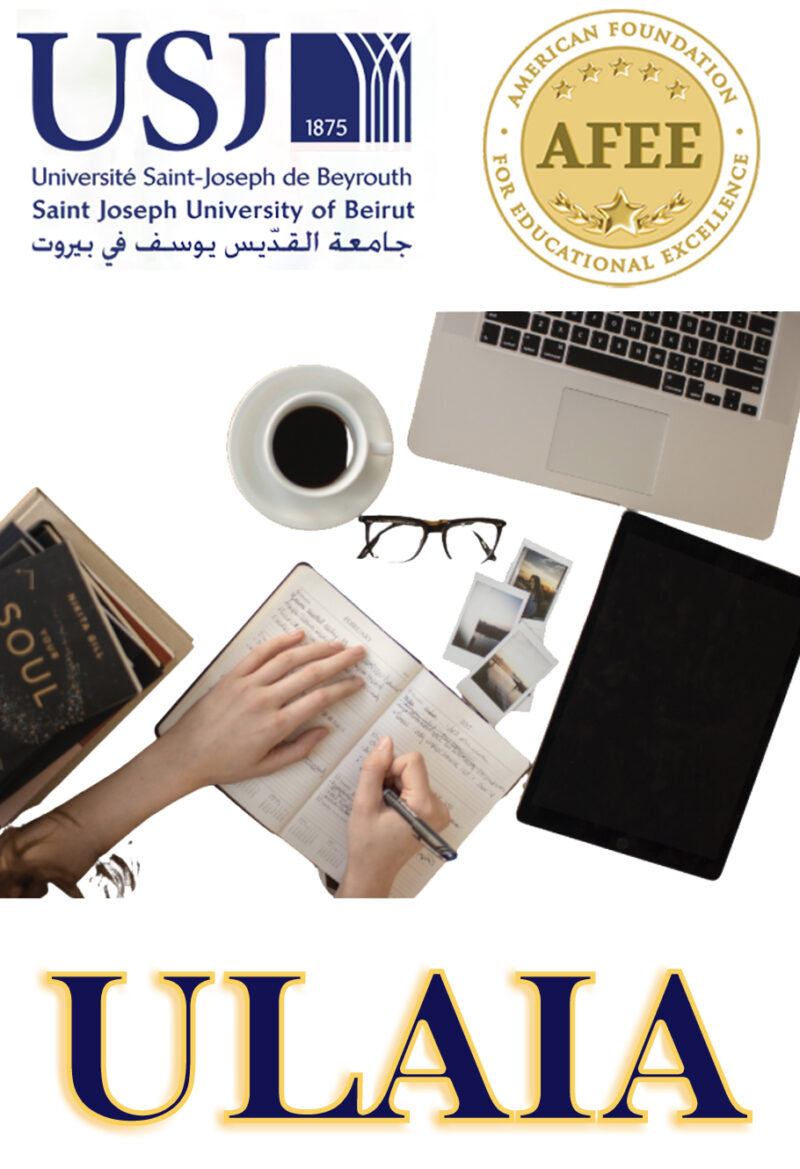
- Timeline: Online courses begin in winter 2025
- Language of Instruction: English
- Age Requirement: Minimum 21 years old
- Participant Capacity: 30 participants per course (minimum 10)
- Cost: $2,000 per course
- Platform: Zoom (interactive sessions with breakout rooms and debriefings)
- Hours: 3 hours per week, from 10 AM to 1 PM NY Time; 5 to 8 PM Beirut Time
- Days: Saturdays and/or Sundays
- Course Duration: 36 hours over 12 weeks (3 months)
2- Under the Institute of Political Science:
(One of the following courses)
Contemporary Issues: These courses focus on identifying and analyzing the unique challenges faced by Lebanon and the Middle East, fostering strategic thinking and collaborative problem-solving.
- Understanding Lebanon and the Middle East: An Overview: This course provides a comprehensive overview of Lebanon and the broader Middle East, covering its history, cultural dynamics, political landscapes, and contemporary issues.
-
- Historical Context: Understand Lebanon’s history and its role in the Middle East.
- Cultural Dynamics: Explore the ethnic, racial, and religious diversity of the region.
- Political Insights: Gain insights into the political landscapes of Lebanon and the Middle East.
- Contemporary Issues: Analyze current economic, social, and geopolitical challenges.
- Artistic Contributions: Appreciate the cultural heritage of Lebanon and the Middle East.
- Language and Heritage: Learn about the region’s languages and their cultural significance.
- Networking: Build a network with peers and experts interested in the region.
- Practical Application: Apply cultural and historical knowledge in real-world scenarios.
- Cultural Sensitivity: Develop cultural sensitivity for professional interactions in the region.
-
- Exploring Lebanon's Uniqueness and Challenges: Identifying Problems and Brainstorming Solutions
-
- Examination of Lebanon's unique cultural, political, and economic landscape.
- Analysis of current problems such as political instability, economic challenges, and social issues.
- Brainstorming for solutions and strategies for sustainable development and stability.
-
- Exploring the Middle East's Uniqueness and Challenges: Identifying Problems and Brainstorming Solutions
-
- Overview of the Middle East's distinctive cultural, historical, and geopolitical characteristics.
- Analysis of regional challenges including conflicts, economic disparities, and governance issues.
- Strategic solutions for peacebuilding, economic development, and regional cooperation.
-
- Exploring political systems and geopolitics in the Middle East: This course provides an in-depth analysis of the political systems and geopolitical dynamics in the Middle East. It examines the historical development, structures, and functions of various political systems in the region, and how these systems interact with regional and global geopolitical forces.
-
- Historical and contemporary political systems in the Middle East.
- Impact of political systems on regional stability and international relations.
- Role of geopolitical factors in shaping the political landscape of the Middle East.
- Influence of external powers on Middle Eastern politics.
-
- Exploring natural resources (mainly water) and geopolitics in the Middle East: This course explores the critical role of natural resources, particularly water, in shaping the geopolitical landscape of the Middle East. It examines the distribution, management, and geopolitical significance of natural resources, and the resulting conflicts and cooperation among Middle Eastern countries.
-
- Distribution and significance of natural resources in the Middle East.
- Geopolitical implications of natural resource management and distribution.
- Role of water resources in regional conflicts and cooperation.
- Strategies for sustainable management of natural resources.
-
+++
- Middle Eastern Politics and Diplomacy: This course explores the intricate dynamics of politics and diplomatic practices in the Middle East. Students will engage with:
-
- Historical and Contemporary Political Systems: Study the evolution and current state of political systems across the region.
- Diplomacy and Foreign Relations: Examine the strategies and outcomes of diplomatic efforts in the Middle East.
- Case Studies on Major Diplomatic Initiatives: Detailed analyses of key diplomatic episodes and their impacts on regional stability.
-
- Diplomatic Studies in the Middle East: This course is focused on the art and impact of diplomacy within the complex geopolitical landscape of the Middle East. It includes:
-
- Diplomatic Theory and Practice: Understanding the foundations and practical applications of diplomacy.
- Negotiation and Conflict Resolution: Techniques and strategies for negotiation, with a focus on diplomatic resolutions.
- Impact Assessment: Evaluating the effectiveness and consequences of diplomatic actions in the region.
-
- Conflict Resolution and Peacebuilding in Lebanon: Aimed at dissecting the layers of conflict and efforts towards peacebuilding in Lebanon, this course covers:
-
- Lebanon's Political and Social Context: Overview of Lebanon’s unique political landscape and societal divisions.
- Conflict Analysis: Examination of the origins, stakeholders, and dynamics of conflicts in Lebanon.
- Peacebuilding Strategies: Exploration of past and current initiatives aimed at achieving lasting peace in Lebanon.
-
Program FAQs
What is the course format?
The course will feature interactive sessions with break-out rooms, debriefs, polls and feedback questionnaires.
What days/times will the sessions take place?
It depends on the course(s) you select.
What are the learning outcomes?
Main Outcome: Click on the details below for specific outcomes.
Will I receive a certificate?
Yes.
Types of Certificates:
- At the end of each course: Certificate in [Course Name]
- After taking 3 courses: Executive Certificate (specific to courses chosen)
- After taking 5 courses: Executive Expert Certificate (specific to courses chosen)
- After taking 6+ courses: Executive Leadership Certificate (specific to courses chosen)
Who teaches the courses?
Mainly professors from Saint Joseph University.
Who moderates and facilitates the courses?
The courses are moderated and facilitated by Nada M. Salem, President/CEO of AFEE and Co-Founder, Chief Executive Officer (CEO) & Chief Academic Officer (CAO) of ULAIA.
 Nada M. Salem is a passionate educator with extensive experience in leading academic institutions in the United States and abroad. Over more than twenty years, she has taught school students, college students, student teachers, teachers, and leaders. She co-created and co- taught a methods course for teachers at The George Washington University Graduate School of Education. Nada is the Co-Editor in Chief of “Teaching World Languages: A Practical Guide- Arabic Edition” (The National Capital Language Resource Center, Washington, DC).
Mrs. Salem holds a teaching diploma, two master's degrees, one in translation and another in education, and has successfully completed most courses (33 credits) towards a doctorate (Ed.D.) in Curriculum and Instruction & Educational Technology Leadership at The George Washington University Graduate School of Education. Additionally, she holds an Executive Certificate in Public Leadership from Harvard University. Mrs. Salem formerly served as Administrative Director and Assessment of Learning Coordinator for AACSB Accreditation at the GWU School of Business’s Master of Science in Finance Program. In September 2019, Mrs. Salem was selected as a WOMAN LEADER by the University of Maryland‘s Kahlil Gibran Chair for Values and Peace. She is a member of the Marquis WHO'S WHO® list of Prominent Business Professionals, and she was featured among Marquis Who's Who's Top Executives in Education and Leadership.
Mrs. Salem is the Founding President/CEO of the American Foundation for Educational Excellence (AFEE), an organization whose mission is to help, on a worldwide basis, influencers, leaders, HR professionals, and managers of educational institutions, profit and non-profit organizations and corporations, to pursue excellence by improving leadership skills, managerial competencies and educational programs, namely through face-to-face and online trainings. AFEE is an Approved Provider for both HRCI & SHRM.
Mrs. Salem is also the Founding President/CEO of AFEE’s subsidiaries, the Center for Excellence in Languages: Teaching, Editing, Translating, and Interpreting, and the International Foundation for Women's Empowerment (IFWE) which seeks to empower all women and help them thrive on the personal and professional levels, regardless of nationality and religion.

TERMS OF SERVICE: We reserve the right, in our sole discretion, to reject or remove anyone who has registered or gained access under false pretenses, provided false information, or for any other action or behavior that we deem inappropriate, before, during or after the webinars, with or without prior notice or explanation, and without liability.
IMPORTANT DISCLAIMER: All rights reserved. The information on this page shall be considered proprietary information not to be used, copied or reproduced in any way. No part of our presentations / workshops / webinars may be reproduced, distributed, or transmitted in any form or by any means, including photocopying, recording, or other electronic or mechanical methods.