Attend Our Exclusive Program and Earn an
Executive Certificate in Leadership:
“The Art of Business & The Art of War:
Using Military Strategies to Combat Challenges in Today’s Business World“
Part I & Part II
(12 webinars in each part)
Days: On SATURDAYS & SUNDAYS
Duration: Part I from April 10 to May 16 | Part II from June 5 to July 18
WEBINAR SERIES: DETAILS

- Webinar Pricing & Certificates and Requirements
- Webinar Speakers
- Webinar Topics
- Webinar Format
- Webinar Details (Including Presenters)
1. WEBINAR PRICING & CERTIFICATES AND REQUIREMENTS:
PRICING/PACKAGES: [Program Certificate Accredited]
Full Program:
-
-
-
-
- Package I: Early Bird Special (By March 10th): $8,000 ($2,000 OFF).
- Package II: Regular Registration (From March 11 to March 31st): $10,000
- Package III: Late Signup (From April 1st): $12,000
-
-
-
Part I
-
-
-
-
- Package I: Early Bird Special (By March 10th): $5,000 ($1,000 OFF).
- Package II: Regular Registration (From March 11 to March 31st): $6,000
- Package III: Late Signup (From April 1st): $7,000
-
-
-
Part II
-
-
-
-
- Package I: Early Bird Special (By May 10th): $5,000 ($1,000 OFF).
- Package II: Regular Registration (From May 11th to May 31st): $6,000
- Package III: Late Signup (From June 1st): $7,000
-
-
-
PRICING/INDIVIDUAL WEBINARS: [Program Certificate NOT Accredited]
Individual webinars are available for $500 each.
CERTIFICATES AND REQUIREMENTS:
If you are interested in becoming part of a closed “International Community of Leaders” and in receiving an Accredited Executive Certificate in Leadership, you must attend at least 12 webinars and fulfill all the requirements: passing the formative and summative assessments and opting for a package.
[Certificates will be presented by AFEE & IFWE, and will reflect the number of webinars attended along with webinar details.]
CLICK HERE TO REGISTER
2. WEBINAR SPEAKERS:
-
- High ranking retired officers from the US and Non-US Armed Forces and the Police
- High-level diplomats
- Some of the best relevant professors from Ivy League universities
- Former Fortune 500 executives.
3. WEBINAR TOPICS:
A- Strategic Planning,
B- Strategic Decision-Making (Game Theory, War Games: Red Teaming, Market Intelligence),
C- Principles of War, and
D- Soft Leadership Skills (Being Mission-Driven, Stress Management, Strategic Communication, Team Building, Diplomacy & Innovation, Conflict Resolution, and Successful Negotiations in Complex Environments).
PART I:
A- Strategic Planning:
-
-
-
-
- Objectives and Assumptions
- Developing Tasks and Properly Assigning Them to Achieve Objectives
- Measuring Progress and Staying on Track
- The Concept of Mission Command and its Key Tenets
- Contingency Planning Through Phases
- Environmental Scanning (which Involves Market Intelligence)
- Threat and Competition Analysis
- Organization and Resourcing to Achieve Objectives
-
-
-
B- Strategic Decision-Making:
-
-
-
-
- Military Decision Making Process and two of its Key Elements: Leader’s Intent and Briefbacks
- Organizational Learning: The After Action Review
- Game Theory Simplified for Business Decision-Makers
- Military War Games: Red Teaming (A red team is a group that plays the role of an enemy or market competitor and provides security feedback from that perspective)
- OODA Loop in Decision-Making (Decision-making occurs in a recurring cycle of Observe–Orient–Decide–Act)
-
-
-
C- Principles of War:
-
-
-
-
- How to Apply Principles of War to Protect Your Business and Prosper
-
-
-
D- Soft Leadership Skills:
-
-
-
-
- Stress Management: Turn Your Stressful Battles Into Sweet Victories
- Training and Team Building
- How to Be Mission Driven and Head to Success
- Esprit de Corps – Instilling Pride, Loyalty and Focus on Mission and Objectives
-
-
-
PART II:
A- Strategic Planning:
-
-
-
-
- Strategies to better clearly define the mission, communicate expectations, get buy-in, and mobilize forces and resources.
- U.S. Civil War: which strategies worked and which did not
- How Efforts to Increase Safety and Reliability can Decrease Safety and Reliability.
- Creating a Cyclic Analysis Framework to Better Meet Business Goals
- Utilizing the Wisdom of the Workforce (all employees) for Strategic and Operational Success
-
-
-
B- Strategic Decision-Making:
-
-
-
-
- Game Theory & Business Strategy
- Military Leadership: Strategic Decision-Making… Sun Tzu & Clausewitz to Improve Global Business Strategies
-
-
-
C- Principles of War:
-
-
-
-
- Principles of War and Military Strategies Applied to the Business World.
-
-
-
D- Soft Leadership Skills:
-
-
-
-
- Diplomacy & Innovation
- Strategic Communication
- Teamwork/ Team Building
- Successful Negotiations in Complex Environments During a Crisis
- Risk Mitigation
- Conflict Resolution
-
-
-
3. WEBINAR FORMAT:
- 20-minute speech with Power Point/Visuals,
- 20-minute breakout room session (10 minutes in groups of 4/5, and 10 minutes for debriefing),
- 20-minute speech with Power Point/Visuals,
- 20-minute breakout room session (10 minutes in groups of 4/5, and 10 minutes for debriefing), ,
- 20-minute speech with Power Point/Visuals,
- 20-minute Q & A.
- At the end of the webinar, all participants complete a feedback questionnaire.
- The participants who opt for the accredited certificate, complete some form of formative assessment at the end of each webinar and, at the end of the series, some form of summative assessment.
4. WEBINAR DETAILS:
Same Day/Time for Almost All: Saturdays & Sundays from 10 AM-12:15 PM New York Time.
Introduction by Nada M. Salem, AFEE/IFWE’s President/CEO, 15 minutes at the beginning of each webinar.
PART I:
A- Strategic Planning:
1- April 10: Tom Ruby, Ph.D., Colonel, USAF (Ret.); CEO of Bluegrass Critical Thinking Solutions; Former Vice Dean, Air Command and Staff College.
 Title: Strategic Planning: Military Principles for Business Success… Turning Available Means into Desired Ends (Session I).
Description: Strategy is the art and process of developing a detailed plan to achieve a desired end using your available means to achieve it. Strategy is hard. If it was easy, everyone would be able to do it well, yet so few can. The reason is that most practitioners either skip important steps altogether or do not follow through on the details. This lesson starts with the two most important aspects of strategic planning: your objectives and your assumptions
Learning Outcomes:
- Participants will be able to comprehend the link between desired ends and available means: the necessity of specifying in detail your objectives;
- Participants will be able to comprehend the necessity of ground truth to strategic planning: how unchallenged assumptions can derail strategic planning.
Bio: Tom Ruby is a retired Air Force Colonel who served 26 years on active duty in positions from Squadron Intelligence Officer, to Chief of Doctrine for the AF ISR Enterprise, to Chief of Special Programs for the Air Force Materiel Command. He was Associate Dean of the Air Command and Staff College where he developed exchange programs with the NATO School, the French École Militaire, the German General Staff College and Poland’s National Defense University. He served on General Petraeus’ Joint Strategic Assessment Team as well as in three combat deployments. He holds a PhD in Political Science from the University of Kentucky, and actively mentors graduate students through the American Political Science Association. He is widely published and speaks globally on topics from critical thinking, to leadership, to strategy, to morality in warfare. He is currently CEO of Bluegrass Critical Thinking Solutions, a business and Defense consulting firm.
A- Strategic Planning:
2- April 11: Tom Ruby, Ph.D., Colonel, USAF (Ret.); CEO of Bluegrass Critical Thinking Solutions; Former Vice Dean, Air Command and Staff College.
 Title: Strategic Planning: Military Principles for Business Success… The Dirty Details of Planning and Follow-Up (Session II
).
Description: Once you have your desired objective and have validated your assumptions, you must select a course of action to achieve your objectives. This requires you to lay out a specific set of tasks in a time-sequenced order, each with specific success criteria. You have to keep to your schedule and make sure all the individual tasks are being done. Then you will see success!
Learning Outcomes:
- Participants will be able to comprehend the importance of selecting from among several courses of action;
- Participants will be able to comprehend the importance of developing tasks to achieve objectives and assigning tasks to a specific person;
- Participants will be able to comprehend the difficulty of measuring progress and staying on track.
Bio: Tom Ruby is a retired Air Force Colonel who served 26 years on active duty in positions from Squadron Intelligence Officer, to Chief of Doctrine for the AF ISR Enterprise, to Chief of Special Programs for the Air Force Materiel Command. He was Associate Dean of the Air Command and Staff College where he developed exchange programs with the NATO School, the French École Militaire, the German General Staff College and Poland’s National Defense University. He served on General Petraeus’ Joint Strategic Assessment Team as well as in three combat deployments. He holds a PhD in Political Science from the University of Kentucky, and actively mentors graduate students through the American Political Science Association. He is widely published and speaks globally on topics from critical thinking, to leadership, to strategy, to morality in warfare. He is currently CEO of Bluegrass Critical Thinking Solutions, a business and Defense consulting firm.
B- Strategic Decision-Making:
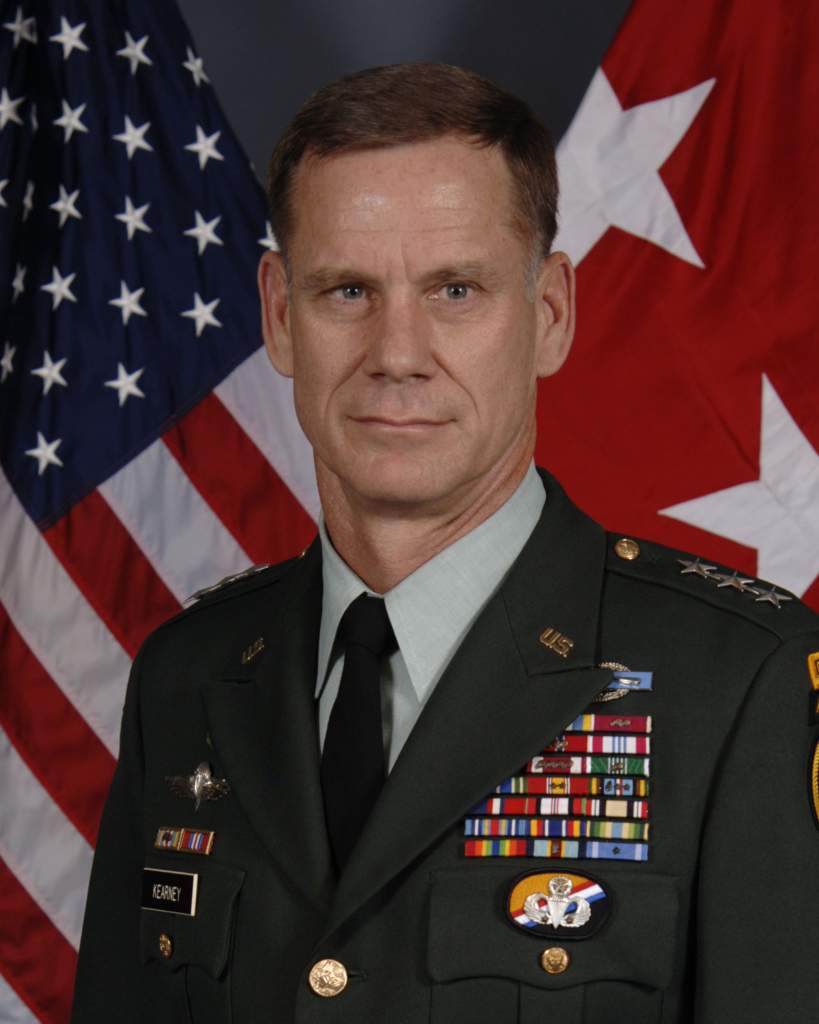
3- April 17: Francis H. Kearney III, Lieutenant General, US Army (Ret.); President of Inside Solutions LLC; Former Senior Special Operations Forces Commander, Center for Naval Analysis; Former Deputy Director for Strategic Operational Planning, National Counter-Terrorism Center.
 Title: Military Processes: “How to Think, Not What to Think.”
Description: The United States Army concept of Mission Command recognizes that operations across the globe will be distributed, decentralized, locally impacted, rapidly changing, yet integrated to achieve outcomes desired and driven by national and regional whole of government strategies. This requires a leadership and planning framework that focuses on how to think, not on what to think. Mental agility and empowerment are critical to executing the Leader’s Intent as changing conditions and variables will ensure no plan will be executed without adjustments. DISCIPLINED PROCESSES, CREATE AGILE ORGANIZATIONS
Learning Outcomes:
- Participants will be able to understand the concept of Mission Command and its key tenets
- Participants will be able to demonstrate understanding of the Military Decision Making Process and two of its key elements: Leader’s Intent and Briefbacks
Leader’s Intent is a core concept in Mission Command; leaders tell their teams what the mission is, why the task is important (purpose), some key tasks required to achieve success and describe what success looks like (end state). The leader does not tell the team how to conduct the mission; the team reflects back to the leader their understanding of the mission in a ‘confirmation brief’, then analyzes the situation, develops courses of action and gives the leadership a ‘backbrief’ on plan which communicates how to achieve the Leader’s Intent. Using Leaders Intent without a confirmation brief and plan backbrief is a risky endeavor; so the three processes are linked.
- Participants will be able to understand the concept of organizational learning: The After Action Review
The Army uses a process called the After Action Review. It is done as soon as possible after execution of a task, project or phase of a project. It is disciplined discussion focusing on 4 questions: What was the plan? What did we actually execute? What did we learn? What element has responsibility for implementing lessons learned? Who else needs to know?
Bio: Lieutenant General Frank Kearney retired on 1 January 2012 from the United States Army after more than 35 years of service. His final active duty assignment was Deputy Director for Strategic Operational Planning at the National Counter-Terrorism Center in Washington DC. General Kearney now serves as the President of his own consulting company, Inside-Solutions-LLC focusing on leader development in organizations. Most recently he served as the Interim CEO and President of Draper Laboratories in Cambridge MA from March to mid October 2020.
He works routinely with Thayer Leadership at the Thayer Hotel at West Point, NY and with military and corporate groups to assist in improving organizational performance through leader development. In this capacity he has worked with leaders in 7-11, Deloitte, Mercedes-Benz USA, General Electric, USAA, Novartis, Madison Square Garden, China-Europe International Business School, Morgan Stanley, Lord Abbett, BorgWarner, Synchrony Bank and many others. General Kearney serves as the Chairman of the Advisory Board for Team Red, White and Blue, a non-profit that helps reintegrate wounded warriors into their communities through physical and social activities, as well as on the Board of Directors for Draper Laboratories, and the advisory boards for Red Gate Group, Xtreme Precision Firearms, Reperi, Westport Construction, and Academy Securities.
General Kearney is a routine speaker on Terrorism, Interagency, Defense and Security issues. He was a congressionally appointed member of National Defense Panel to assess scenarios, recommendations and conclusions for the 2014 Quadrennial Defense Review (QDR). General Kearney also serves as a Distinguished Faculty Member of the Joint Special Operations University at USSOCOM and as a mentor to the Department of State Foreign Service Institute in Washington DC. He is a Senior Special Operations Fellow at the Center for Naval Analysis, an FFRDC in Washington DC.
General Kearney is a 1976 graduate (BS) of the United States Military Academy and a 1985 graduate (MEd) of the University of South Carolina. He is a graduate of the US Army Command and General Staff College as well as the United States Army War College. He has served in operational and command assignments at every level with combat tours in Grenada, Panama, Bosnia, Iraq and Afghanistan, including combat parachute assaults into Grenada and Panama. General Kearney’s most recent assignments at the strategic and operational level focused on Special Operations and Counter-Terrorism. He planned and participated in the opening campaigns of Operation Enduring Freedom in Afghanistan and Operation Iraqi Freedom in Iraq and commanded all Theater Special Operations forces in the middle-east including OIF and OEF from March 2005 to June 2007. General Kearney also served as the Deputy Combatant Commander for United States Special Operations Command (SOCOM) from 2007-2010 and insured that the 62,000 operators of this command were properly trained and equipped for their global special operation’s missions. General Kearney oversaw the SOCOM requirements process, the execution of a 10 billion dollar budget and led the SOCOM Quadrennial Defense Review (QDR) team for the 2010 QDR.
General Kearney also sat on the DOD Ballistic Missile Defense Review Committee and the Deputy Secretary of Defense’s Advisory Working Group managing the Defense Department’s annual budget approval and execution. Finally, at the National Counter-Terrorism Center, General Kearney worked with 16-29 different cabinet level agencies in the US government to plan and coordinate the whole of government efforts to achieve the goals of the Obama Administration’s Counter-Terrorism strategy. His team coordinated key implementation plans against terrorist groups and assessed the efforts to achieve stated goals as well as provided input to the Office of Management and Budget on funding priorities for the national counter-terrorism budget.
A- Strategic Planning:
4- April 18: Matthew S. A. Feely, Ph.D., Captain, U.S. Navy (Ret.); Faculty Instructor, United States Army War College; Adjunct Assistant Professor, Columbia Business School, Columbia University.
 Title: Contingency Planning: Utilizing a Phase Construct and Environmental Scanning in the Face of a Crisis.
Description: When crisis strikes, the only certainty is uncertainty – accompanied by volatility, complexity and ambiguity. Conditions can overwhelm the psychology of responders whose ability to operate effectively in the face of a crisis suffers as a result. Leadership must find a way to inject a sense of calm into the organization(s) – even at the height of a crisis. And nothing is more calming than when an organization realizes that the crisis at hand has, in fact, been anticipated and planned for, that the plan can and will be executed, and that progress can be made and measured.
Phasing – or dividing an operation into a series of operations – helps to calm the organization battling a crisis or multiple crises. According to the U.S. military’s Joint Doctrine Publication 3-0, Phasing, can be useful for any operation, “regardless of size.”
Phasing facilitates organization’s efforts to visualize, plan, and execute the entire operation and define requirements in terms of personnel, resources, time, space, and purpose. Phasing helps organizations systematically achieve objectives that cannot be achieved all at once – by arranging smaller, focused, related operations in a logical sequence.
This webinar will look at three explicit phasing constructs: (1) The U.S. Department of Defense Military Operations Phase Construct; (2) The “Sequential Task Construct” often applied to natural and anthropogenic-caused environmental disasters; and (3) a hybrid phased construct that the U.S. Navy utilized during Operation Tomodachi, the Japan-U.S. bilateral humanitarian assistance and disaster relief response in the aftermath of the Great East Japan Earthquake in March, 2011.
The phase construct that a private or public sector organization designs must be tailor-fitted to the organization’s capabilities, its environment, its purpose and the spectrum of risks it faces. Thus, it is reasonable to think that the phase construct for a private sector, profit seeking organization would differ from that of a non-governmental organization or a government agency. All phase constructs, however, must account for three groupings of activities across the time domain.
- The first phase of any construct involves planning – which, in turn, requires the explicit understanding of: market intelligence, industrial organization, predictive scenario planning or, when complexity is too great for predictive scenario planning, environmental scanning or another alternative to contingency planning.
- A second grouping of phases includes the execution of the plans – which accounts for the beginning of operations, expansion of operations, steady-state operations and reduction of operations.
- The third and last grouping of phases includes returning to pre-crisis norms (or near pre-crisis norms) and lessons learned.
Learning Outcomes:
- Participants will be able to recognize the benefits of “phasing operations;”
- Participants will be able to learn the technique of environmental scanning (which involves market intelligence) as an alternative technique to traditional scenario planning; and
- Participants will be able to build phase structure for their organizations.
Bio: Matthew S. A. Feely joined the faculty at the Columbia Business School in May 2013, teaching strategic leadership and leadership decision-making to emerging leaders in the MBA and Executive MBA programs as well as to senior executives in the Crisis Leadership Executive Program and Advanced Management Program. Matt is also a faculty instructor at the United States Army War College where he leads two, year-long seminars of senior military officers in graduate studies to help them emerge as the next generation of strategic thinkers and leaders, applying their craft in a volatile, uncertain, complex and ambiguous world.
His work in the classroom and lecture halls exemplifies a fusion of theoretical knowledge with practical experience gained from a robust scholarship coupled with a three decade-long navy career and recent problem solving work he has done on behalf of the private sector, the United States defense establishment and political campaigns. Matt’s case study about his experiences leading relief operations after the Great East Japan Earthquake earned the distinction of being the first Columbia University case study ever to be published as a paper case and as a multi-media case study.
Matt earned a B.S. at the U.S. Naval Academy, an MBA at the Wharton School and a Ph.D. in Decision Sciences at the Wharton School’s Center for Risk Management and Decision Processes and the Center for Energy and the Environment, University of Pennsylvania. He is also a distinguished graduate of the National Defense University.
B- Strategic Decision-Making:
5- April 24: Dean Dudley, Ph.D., Associate Professor of Economics at United States Military Academy, West Point.
 Title: Game Theory: The Art of Strategic Decision Making
Description: Game theory is the rigorous and methodical examination of strategic choice. It is useful to decision makers for two very important reasons. For the intuitive leader whose penetrating eye sees to the heart of a strategic choice arena, and through gut and instinct chooses a course of action that leads to success, game theory provides a tool to methodically explain to others the merit of that course of action. For the methodical leader who concentrates on doctrine and experience, game theory gives a tool to evaluate the potential success or failure of competing courses of action. All in all, game theory serves the decision-maker as an explanatory and as an evaluative tool. Both of these uses of game theory would be powerful tools for the military decision-maker.
The explanatory power of game theory in strategic choice arenas becomes even more important when we move away from the over-simplistic characterization of the battlefield as a game of chess, where the decision maker moves non-intelligent and non-cognizant military units as pawns across the board. If a decision-maker has human subordinates, it is possible that the intuitive course of action is seen by someone other than the decision-maker. Under this circumstance, the decision-maker must be persuaded that the intuitive course of action is actually the most advantageous course of action. Here, the framework of game theory reveals its power as an explanatory tool, as a superstructure upon which the skin of assumptions, of actors, of courses of action, and of interactive outcomes, can be hung. In short, game theory can be used to systematically explain the relevance of a particular course of action.
The second benefit of game theory is its evaluative use. In planning sessions, game theory can be used to lay out all the relevant courses of action available to actors in a strategic choice arena. The chosen courses of action come together in that arena to form interactive outcomes. These outcomes then have some value to all of the actors involved. Decision-makers with foresight will look ahead to the outcomes and evaluate which courses of action will give them the most favorable outcomes. The game theoretic structure is an excellent tool for systematically evaluating various courses of action with their associated interactive outcomes.
Learning Outcomes:
- Participants will be able to recognize and define what constitutes a game
-
- Players
- Courses of action
- Outcomes
-
- Participants will be able to observe a game and construct a formal model of that game
-
- Determine the players
- Determine the set of actions available to the players
- Map the action choices to particular outcomes
-
- Participants will be able to apply rational choice and determine the game’s equilibria.
Extensions: Recognize the incentive structure within any game and understand how the incentives can be changed to generate more favorable equilibrium outcomes.
Bio: Senior Civilian Economist specializing in Game Theory, Microeconomic Theory and Non-linear Optimization. Finishing a book titled “Game Theory and the Art of War” and actively pursuing research in Military Manpower Issues.
RESEARCH INTERESTS
My current research focuses on military applications of game theory. Of particular interest is a theory of rational political extremism. The question then arises as to whether there can be rational explanations to extreme acts. From an economics perspective, can extremism, in particular can political extremism be the result of constrained optimization on well behaved preference sets? Using a simple spatial model of political participation, political rent seeking, imperfect information, and constrained optimization, a rational political extremist will emerge.
EDUCATION
Ph.D, Economics, Indiana University, Bloomington, IN; BA, Economics, Eastern Washington University, Cheney, WA.
TEACHING EXPERIENCE
Assistant Professor, Department of Social Sciences, United States Military Academy, West Point, NY; Aug. 1993 to present.
Adjunct Faculty, Graduate School of Business Administration, Mount St. Mary’s College, Newburgh, NY; Oct. 1997 to Present.
PUBLICATIONS
Dean Dudley, “Planning, Budgeting, and management” in American National Security, 7th edition, 2015.
Dean Dudley, “Issue 11 Free Trade” in Taking Sides: Clashing Views in American Foreign Policy, 6th edition, By Suzanne Nielsen , Scott Handler, McGraw-Hill, 2013.
Dean Dudley, “Using Credit Wisely” in Personal Financial Planning Guide for the Armed Forces, 7th edition, edited by Jamie Gayton and Scott Handler, Stackpole Books, 2012.
Dean Dudley, “Paying Your Taxes” in Personal Financial Planning Guide for the Armed Forces, 7th edition, edited by Jamie Gayton and Scott Handler, Stackpole Books, 2012.
Dean Dudley, “Meeting Medical Expenses” in Personal Financial Planning Guide for the Armed Forces, 7th edition, edited by Jamie Gayton and Scott Handler, Stackpole Books, 2012.
Dean Dudley, “Meeting Medical Expenses” in Armed Forces Guide to Personal Financial Planning, 6th edition, edited by Margaret Belknap and Michael Marty, Stackpole Books, 2007.
Steven Hackett, Dean Dudley, James Walker. “Heterogeneities, Information, and Conflict Resolution: Experimental Evidence.” in Local Commons and Global Interdependence: Heterogeneity and Cooperation in Two Domains, edited by Robert Keohane and Elinor Ostrom, Sage Publications, Jan. 1995.
Steven Hackett, Dean Dudley, James Walker. “Heterogeneities, Information, and Conflict Resolution: Experimental Evidence.” Journal of Theoretical Politics, Vol. 6, No. 4, Oct. 1994.
D- Soft Leadership Skills:
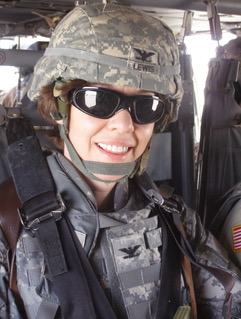
6- April 25 at 11:00 AM EST: Debra Lewis, Colonel, US Army (Ret.), West Point’s 1st Class w/Women; Harvard MBA; “Infinite-Win Engineer” who Led a $2.1B Construction Program in a Conflict-Ridden Combat Area; Founder of Mentally Tough Women, USA.
 Title: ‘Armor Up’ with Mental Toughness: Turn Your Stressful Battles into Sweet Victories & Liberate the Best in Your Team.
Description: What if handling people-stress is the key to greater success?
Colonel Deb’s unique approach trains you to handle more stress – not de-stress – and puts it to work for you.
[Amidst the turmoil of events, do not lose your presence of mind.
Unexpected challenges and setbacks will tempt you to respond with anger or anxiety, which will only create more difficulties for yourself. Learn to refrain from imposing your emotions onto reality and see things objectively so that you can react with a calm mind.]
https://www.businessinsider.com/war-strategies-to-win-in-business-2014-8
Learning Outcomes:

Bio: Colonel Deb Lewis is a West Point graduate from its first class with women. A retired Army Colonel and Harvard MBA, Deb commanded three US Army Corps of Engineer Districts, including a $2.1B reconstruction program in combat. She survived the 9/11 Pentagon attack while serving on the Joint Staff antiterrorism team. Colonel Deb’s experiences leading while under fire inspired her unique ‘Mentally Tough Women’ (MTW) program to help women handle more stress – not de-stress – and put it to work for them. MTW arms women (and enlightened men!) with the proven strategies, insights, and tools they need in good times and times of crisis.
After a 34-year military career, Colonel Deb and husband Doug Adams embarked on the Duty, Honor, America Tour October 7, 2010. She drove their RV 26K miles as Doug bicycled 18,067 miles through all 50 states in one year in support of the U.S. military, veterans, and families. They continue to work with non-profits, businesses, and leaders to lift up communities.
“The better you get at handling stress, the easier it becomes to do insanely hard things and really love doing it.“
B- Strategic Decision-Making:
7- May 1: Hon. Mark Kimmitt, Brigadier General, US Army (Ret.); Former Assistant Secretary of State, Political-Military Affairs, State Department; Former Deputy Assistant Secretary of Defense for Middle East Policy, United States Department of Defense/Pentagon; Harvard/West Point.
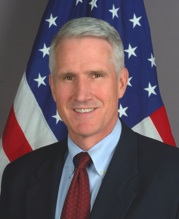 Title: Principles of war- critical functions- strategic communications communicating to stakeholders- strategic planning: types of planning (tactical, operational, strategic).
Description:
Learning Outcomes:
Bio: Brigadier General Mark T. Kimmitt, USA (Ret.) served as Assistant Secretary of State for Political-Military Affairs from 2008 to 2009. In that capacity, he was responsible for State Department political-military policy, with particular emphasis on security assistance and sales of arms around the world, as well as serving as the primary liaison between the Departments of State and Defense. He was also instrumental in recent counter-piracy operations off the coast of Somalia, and negotiated the groundbreaking arrangements for the prosecution of pirates abroad
From 2006 to 2008, Kimmitt served as the Deputy Assistant Secretary of Defense for Middle East Policy, responsible for defense policy development, planning, guidance and oversight for the region. He was involved in every key defense deliberation during that period, to include the change in U.S. strategy for Iraq in 2006, participating in the Status of Forces negotiations with Iraq and leading DOD efforts to enhance security in the Middle East through the Gulf Security Dialogue.
Kimmitt served for over 30 years as an officer in the United States Army in a wide variety of command, operational, and policy positions with extensive operational experience abroad before retiring with the rank of Brigadier General in 2006. His assignments included Deputy Director of Strategy and Plans at United States Central Command from 2004 to 2006 and Deputy Director of Operations and Chief Military Spokesman for Coalition Forces in Iraq in 2003 and 2004. He has led soldiers and paratroopers at every level of command in the artillery.
Kimmitt is a graduate of the United States Military Academy. He holds a Masters Degree (with Distinction) from Harvard Business School. He also earned Masters from the School of Advanced Military Studies and the National Defense University, and a professional certification as a Chartered Financial Analyst (CFA). He also served as Assistant Professor of Finance and Economics in the Department of Social Sciences at the United States Military Academy.
A- Strategic Planning:
8- May 2: Daylian Cain, Ph.D., Yale University; Award-Winning Faculty Member.
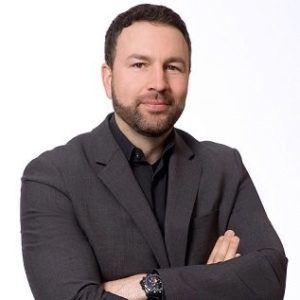 Title: Red Teaming: How to Successfully Play the Role of an Enemy or Competitor, and Provide Security Feedback from that Perspective.
Description:
Learning Outcomes:
Bio: Daylian M. Cain, Ph.D., is an award-winning Yale faculty member who studies why smart people do dumb things. He is a Senior Lecturer of Negotiations, Leadership, & Ethics at the Yale School of Management. Hailing from Nova Scotia, Canada, Cain has a Ph.D. in Management from Carnegie Mellon. Prior to joining Yale, Cain was the Russell Sage Fellow of Behavioral Economics at Harvard University.
Cain is often one of the highest-rated professors in Yale’s executive education. For multiple years, he had the highest yearly-average rating and lowest variance in ratings. Cain is lead faculty on a new sales and leadership training program for Volvo America, lead instructor for the “Yale Negotiation Strategies” online program, and co-instructs Yale’s “Leading Effective Decision-Making” program, which earned the highest-ever rating of an inaugural program on Yale’s platform.
Fun Fact: Dr. Cain has appeared as a special guest on National Geographic’s TV show Brain Games (Season 2, “You Decide”).
A- Strategic Decision-Making:
9- May 8: Cal Astrin, Captain, US Navy, (Ret.); Capture Executive at Raytheon; Former Director, Business Development, Lockheed Martin; Former Nuclear Submarine Commander.
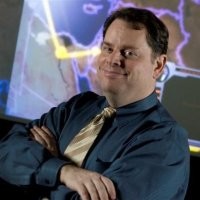 Title: Ooda Loop in Decision-Making (Decision-making occurs in a recurring cycle of Observe–Orient–Decide–Act)
Description:
Learning Outcomes:
Bio:
A- Strategic Planning & D- Soft Leadership Skills:
10- May 9: Richard A. Stewart, Major, US Marine Corps (Ret.); Principal Consultant, KBR, Inc.; Author of “Sunrise at Abadan: The British and Soviet Invasion of Iran, 1941” (1988).
Title: Applying Principles and Methods of Military Strategy to Effective Business Planning
Description: How the following military principles and methods can be adopted to improve business planning and execution:
- Mission, Defining Objectives (to accomplish mission),
- Planning to achieve Objectives
- Threat and Competition Analysis
- Long-Term Planning, Short-Term Planning
- Organization and Resourcing to Achieve Objectives
- Training and Team Building
- Flexible Execution and Adaptability
- Esprit de Corps – Instilling Pride, Loyalty and Focus on Mission and Objectives
- Making a Difference
- Rewards
Some Examples of Military methods affecting industry business practices:
- U.S. Navy Nuclear Submarine Program’s Program Evaluation and Review Technique (PERT) statistical tool was adopted by industry to analyze and represent the tasks involved in completing a given project. Basis for developed Enterprise Resource Program (ERP) just-in-time processes.
- Jeff Sutherland, Developer of Agile-Scrum methodology for software development used throughout industry credited U.S. military adaptive software development methods for this methodology
Learning Outcomes:
Bio: RICHARD A. STEWART is a retired Major in the United States Marine Corps in which he specialized in intelligence and communications. He has published numerous articles on political-military affairs and history in such professional journals as the Army War College Journal, U.S. Naval Institute Proceedings, Armed Forces Journal International, and the Marine Corps Gazette.
- Graduate, U.S. Naval Academy, Naval Science and International Security Affairs
- Masters in National Security Studies, Georgetown University
- Masters in Public Administration, Pepperdine University
- Career Marine Corps Communications, Signals Intelligence and Electronic Warfare Officer
- Communications Office, 9th Marines, Okinawa – Supported Operation Frequent Wind (Evacuation of Saigon)
- Platoon Commander and Company Executive Officer, Kaneohe Marine Air Station, Hawaii
- Electronic Warfare Office, Marine Corps Air Ground Combat Center, Twentynine Palms, CA
- Advanced Marine Corps Communications Officers Course, Quantico, VA
- Developed Concept of Operations Paper for Marine Corps Light Armored Vehicle Program
- Provided concept for Marine Corps Amphibious Warfare School adopting Persian Gulf Final Exercise Scenario
- Participated in Exercise Bright Star II – 1981 Joint US-Egyptian Military Exercise
- Acquisition Project Officer including variant of Light Armored Vehicle
- Battalion Operations and Executive Officer, Camp Lejeune, North Carolina
- Participated in contingency preparations for intervention in Haiti
- Staff Signals Intelligence/Electronic Warfare, Headquarters, Fleet Marine Corps, Atlantic
- Participated in Joint Task Force planning contingency for intervention in Haiti
- Deputy, Signals Intelligence/Electronic Warfare for Research, Development and Acquisition
- Four years system research, development and acquisition experience
- Corporate Experience
- 17 Years Director-Level Management
- CSC
- Program Manager on Federal INFOSEC Programs
- Director of Security Engineering, Information Security Operations Center (ISOC)
- Chief Technical Officer, ISOC
- Director of New Business and Transition, ISOC
- Director of Sales Operations, Global Cybersecurity Services
- CGI
- Director, Consulting, Cybersecurity Solutions
- Director, Cybersecurity Practice, CGI Federal
- SGT
- Corporate Chief Information Security Officer
- G2
- Senior Program Manager/Engineer
- Supported development of Presidential NIST Cybersecurity Framework
- KBR
- Principal Consultant, Subject Matter Expert, Cybersecurity
C- Principles of War:
11- May 15: Sedat Cevikparmak, Ph.D., Assistant Professor and Chair of Supply Chain Management Program, Division of Business, DeSales University; Infantry Battalion Commander, Aydin, Turkey; Turkish Army War College; BS in Foreign Area Studies (Middle East), the United States Military Academy, at West Point, NY; MS in National Security Affairs (Middle East), Naval Post-Graduate School, Monterey, CA.
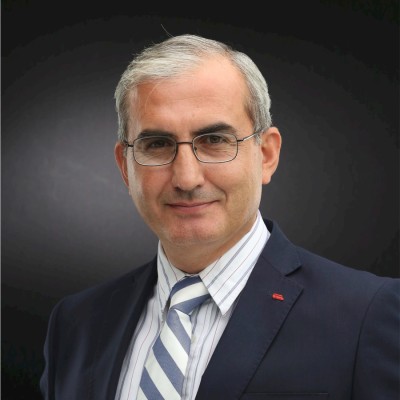 Title: How You Can Apply Principles of War to Protect Your Business and Prosper.
Description: Objectives, Offensive, Security, Unity of commands, Surprise and War gaming… assess what competition is doing… have the upper hand… surprise… security.
Learning Outcomes:
Bio:
12- May 16: TBA
PART II:
C- Principles of War:
1- June 5: Hon. David Schenker, Senior Fellow, The Washington Institute for Near East Policy; Former Assistant Secretary of State for Near Eastern Affairs.
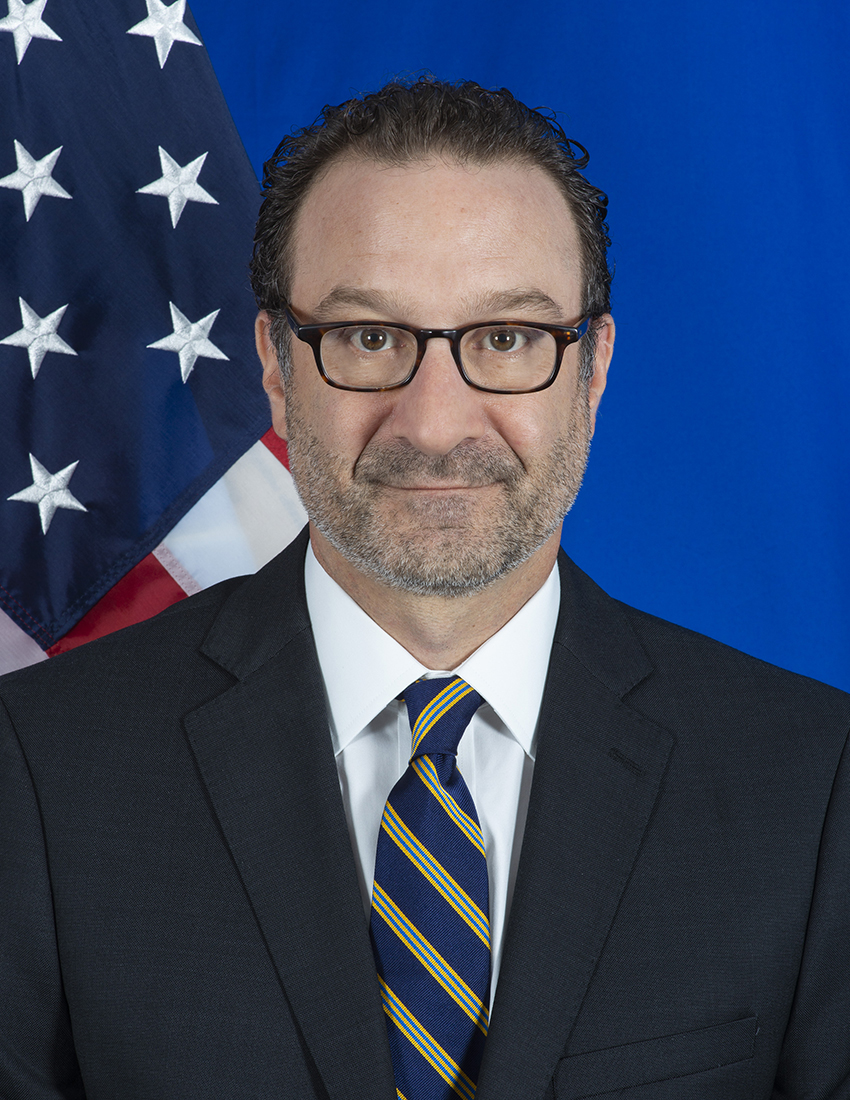 Title: Principles of War and Military Strategies Applied to the Business World.
Description: Successful U.S. Flag officers and senior diplomats navigate and mobilize complex bureaucracies and institutions to defend their country, contend with national security challenges, and promote American interest abroad. Their experience is transferable to the business world. This webinar will explore how participants might employ these strategies in their own organizations.
Learning Outcomes:
- Participants will be able to identify the principles and characteristics of war.
- Participants will be able to examine the conduct of diplomacy—what works and what doesn’t.
- Participants will be able to discuss strategies to better clearly define the mission, communicate expectations, get buy-in, and mobilize forces and resources.
Bio: David Schenker is a Senior Fellow at The Washington Institute. Confirmed by the Senate on June 5, 2019, he served as Assistant Secretary of State for Near Eastern Affairs through January 2021. In that capacity, he was the principal Middle East advisor to the secretary of state and the senior official overseeing the conduct of U.S. policy and diplomacy in a region stretching from Morocco to Iran to Yemen, with responsibility for eighteen countries, the Palestinian Authority, and Western Sahara. He also supervised more than 9,000 staff and administered an annual budget in excess of $7 billion.
In policy terms, he led the bureau’s efforts to advance American interests abroad and strengthen U.S. partnerships and alliances across the region. Via diplomacy and the effective allocation of resources and assistance—as well as through imposition of sanctions—he worked to promote human rights, deter terrorism, fight corruption, and push back against regional adversaries. In addition to developing and implementing the U.S. strategy on China in the region, he worked to heal the Gulf rift between Qatar and neighboring states, resolve intractable conflicts in Libya and Yemen, consolidate the Abraham Accords, and counter malign Iranian influence in the Middle East.
Prior to joining the State Department, Schenker worked as the Aufzien Fellow and director of the Beth and David Geduld Program on Arab Politics at The Washington Institute from 2006 to 2019. During that period, he authored dozens of op-eds, journal articles, and PolicyWatches about Jordan, Lebanon, Hezbollah, and Egypt, among other topics, and contributed chapters to Institute monographs such as Beyond Islamists and Autocrats: Prospects for Political Reform Post Arab Spring (2017) and No Good Outcome: How Israel Could be Drawn into the Syrian Conflict (2013). He also published a chapter on U.S.-Lebanese relations in Lebanon: Liberation, Conflict, and Crisis (Palgrave, 2009), and authored Egypt’s Enduring Challenges (2011), an Institute monograph focusing on the post-Mubarak situation.
Previously, from 2002 to 2006, Schenker served in the Office of the Secretary of Defense as Levant country director, the Pentagon’s top policy aide on the Arab nations of the Levant. In that capacity, he advised the secretary and other senior Pentagon leadership on the military and political affairs of Syria, Lebanon, Jordan, and the Palestinian territories. He was awarded the Office of the Secretary of Defense Medal for Exceptional Civilian Service in 2005.
Prior to joining the government in 2002, Schenker focused on Arab governance issues as a research fellow at The Washington Institute, and worked as a project coordinator for a Bethesda-based contractor responsible for large, centrally funded USAID programs in Egypt and Jordan. He also authored the Institute books Dancing with Saddam: The Strategic Tango of Jordanian-Iraqi Relations (copublished with Lexington Books, 2003) and Palestinian Democracy and Governance: An Appraisal of the Legislative Council (2001). His writings on Arab affairs have appeared in a number of prominent scholarly journals and newspapers, including the Wall Street Journal, Los Angeles Times, and Jerusalem Post.
M.A., University of Michigan; Certificate, Center for Arabic Study Abroad (CASA), American University in Cairo;
B.A., University of Vermont
2- June 6: TBA
A- Strategic Planning:
3- June 12: Michael O’Hanlon, Ph.D. (Princeton University), Senior Fellow and Director of Research in Foreign Policy at the Brookings Institution; Co-director of the Center for Security, Strategy, and Technology; Adjunct professor at Columbia and Georgetown Universities; Lecturer at The George Washington University; Member of the International Institute for Strategic Studies.
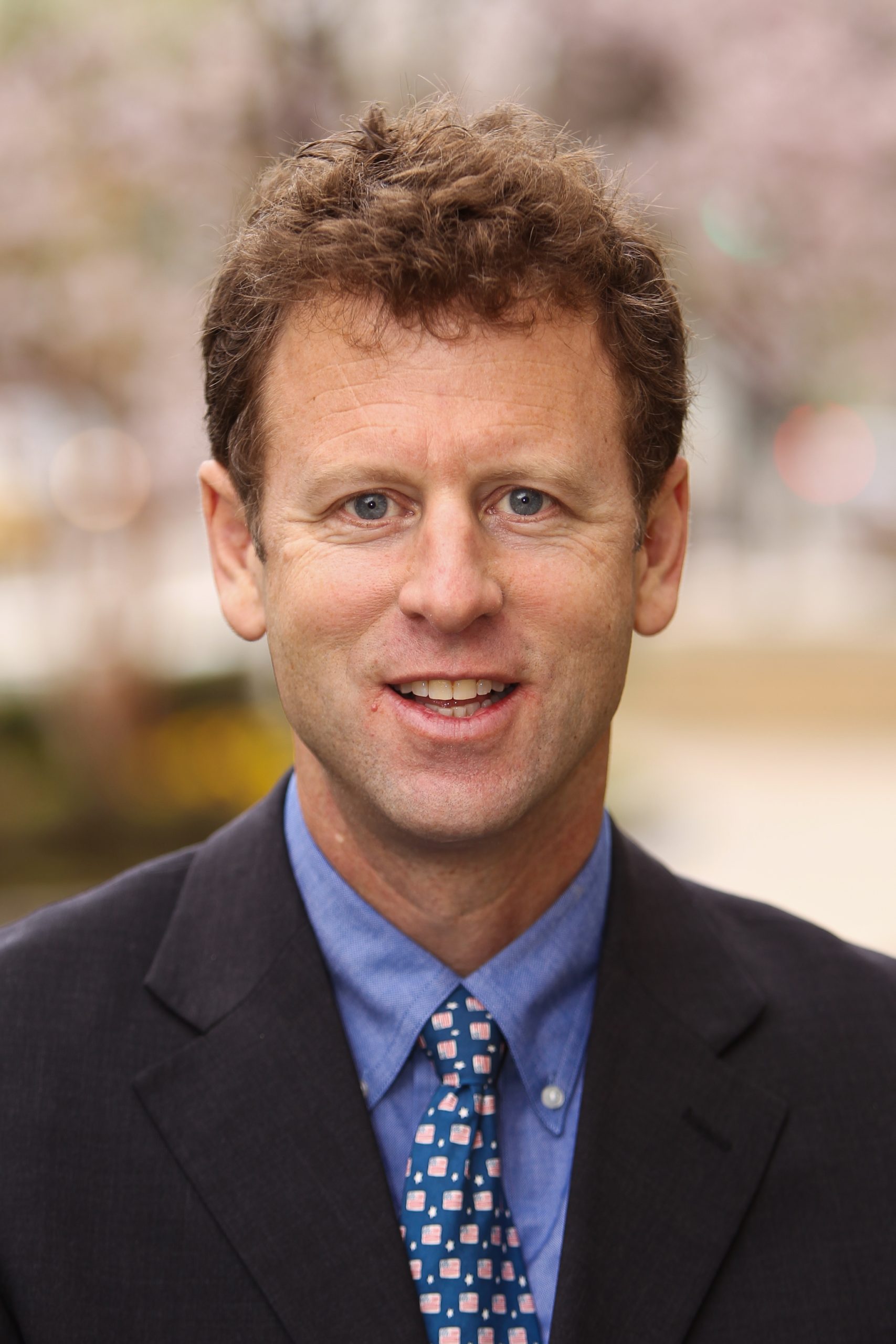 Title: Learning—and not Learning—from the U.S. Civil War.
Description: Rethinking the US Civil War, with an eye towards understanding which strategies worked and which did not (on both sides)—but with more sympathy for some of the bad decisions than is sometimes displayed by historians. I would do this as a reminder to current business leaders of how easy it can be to set off and stay on the wrong foot.
Learning Outcomes:
Bio: Michael O’Hanlon is a senior fellow, and director of research, in Foreign Policy at the Brookings Institution, where he specializes in U.S. defense strategy, the use of military force, and American national security policy. He co-directs the Center for Security, Strategy, and Technology; the Defense Industrial Base working group; and the Africa Security Initiative within the Foreign Policy program, as well. He is an adjunct professor at Columbia and Georgetown universities, a professional lecturer at George Washington University, and a member of the International Institute for Strategic Studies. O’Hanlon was also a member of the external advisory board at the Central Intelligence Agency from 2011-12.
O’Hanlon’s latest books include “The Senkaku Paradox: Risking Great Power War over Limited Stakes” (Brookings Institution Press, 2019); “Beyond NATO: A New Security Architecture for Eastern Europe” (Brookings Institution Press, 2017); “The Future of Land Warfare” (Brookings Institution Press, 2015); and “Strategic Reassurance and Resolve: U.S.-China Relations in the 21st Century” (with Jim Steinberg, Princeton University Press, 2014). Previously, he wrote “Bending History: Barack Obama’s Foreign Policy” (with Martin Indyk and Kenneth Lieberthal, Brookings Institution Press, 2012); “A Skeptic’s Case for Nuclear Disarmament” (Brookings Institution Press, 2010); “The Science of War” (Princeton University Press, 2009); “Crisis on the Korean Peninsula” (with Mike Mochizuki, McGraw-Hill, 2003); “Winning Ugly: NATO’s War to Save Kosovo” (with Ivo Daalder, Brookings Institution Press, 2000); and “Technological Change and the Future of Warfare” (Brookings Institution Press, 2000), among other books.
O’Hanlon has written several hundred op-eds in newspapers including The Washington Post, The New York Times, The Los Angeles Times, The Washington Times, The Financial Times, The Wall Street Journal, The Japan Times, USA Today, and Pakistan’s Dawn paper. His articles have appeared in Foreign Affairs, The National Interest, Survival, Washington Quarterly, Joint Forces Quarterly, and International Security, among other publications. O’Hanlon has appeared on television or spoken on the radio some 4,000 times since September 11, 2001.
O’Hanlon was an analyst at the Congressional Budget Office from 1989 to 1994. He also worked previously at the Institute for Defense Analyses.
His doctorate from Princeton is in public and international affairs; his bachelor’s and master’s degrees, also from Princeton, are in the physical sciences. He served as a Peace Corps volunteer in Congo/Kinshasa (the former Zaire) from 1982-84, where he taught college and high school physics in French. Earlier, he worked on a dairy farm in Upstate New York, where he grew up, and attempted (unsuccessfully) with a team of Princeton experimental physicists in the “Gravity Group” to disprove Einstein’s General Theory of Relativity.
Affiliations:
Columbia University, adjunct professor
George Washington University, Elliott School of International Affairs, professional lecturer
Georgetown University, Center for Security Studies, adjunct professor
A- Strategic Planning:
4- June 19: Scott Sagan, Ph.D.; Professor of Political Science; Senior Fellow at the Center for International Security and Cooperation (CISAC), Freeman Spogli Institute for International Studies, Stanford University.
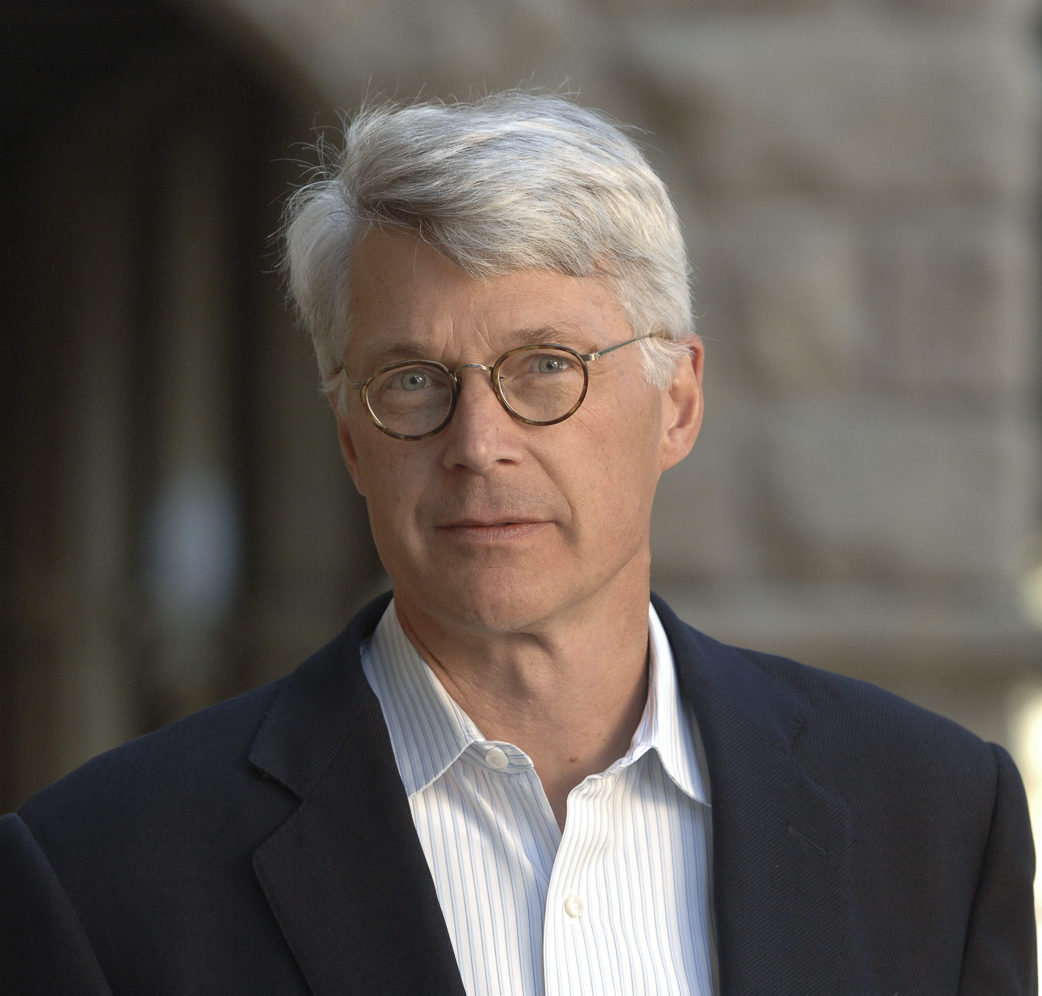
Title: When Redundancy Backfires in National Security and Business: How Efforts to Increase Safety and Reliability can Decrease Safety and Reliability.
Description:
Learning Outcomes:
Bio: Scott D. Sagan is the Caroline S.G. Munro Professor of Political Science, the Mimi and Peter Haas University Fellow in Undergraduate Education, and Senior Fellow at the Center for International Security and Cooperation and the Freeman Spogli Institute at Stanford University. He also serves as Chairman of the American Academy of Arts and Sciences’ Committee on International Security Studies. Before joining the Stanford faculty, Sagan was a lecturer in the Department of Government at Harvard University and served as special assistant to the director of the Organization of the Joint Chiefs of Staff in the Pentagon. Sagan has also served as a consultant to the office of the Secretary of Defense and at the Sandia National Laboratory and the Los Alamos National Laboratory.
Sagan is the author of Moving Targets: Nuclear Strategy and National Security (Princeton University Press, 1989); The Limits of Safety: Organizations, Accidents, and Nuclear Weapons (Princeton University Press, 1993); and, with co-author Kenneth N. Waltz, The Spread of Nuclear Weapons: An Enduring Debate (W.W. Norton, 2012). He is the co-editor of Learning from a Disaster: Improving Nuclear Safety and Security after Fukushima (Stanford University Press, 2016) with Edward D. Blandford and co-editor of Insider Threats (Cornell University Press, 2017) with Matthew Bunn. Sagan was also the guest editor of a two-volume special issue of Daedalus: Ethics, Technology, and War (Fall 2016) and The Changing Rules of War (Winter 2017).
Recent publications include “Does the Noncombatant Immunity Norm Have Stopping Power?” with Benjamin A. Valentino in International Security (Fall 2020); “Why the atomic bombing of Hiroshima would be illegal today” with Katherine E. McKinney and Allen S. Weiner in The Bulletin of the Atomic Scientists (July 2020); “Weighing Lives in War: How National Identity Influences American Public Opinion about Foreign Civilian and Compatriot Fatalities” with Benjamin A. Valentino in the Journal of Global Security Studies (December 2019); “On Reciprocity, Revenge, and Replication: A Rejoinder to Walzer, McMahan, and Keohane” with Benjamin A. Valentino in Ethics & International Affairs (Winter 2019); and “Armed and Dangerous: When Dictators Get the Bomb” in Foreign Affairs (October 2018).
In 2018, Sagan received the Andrew Carnegie Fellowship from the Carnegie Corporation of New York. In 2017, he received the International Studies Association’s Susan Strange Award which recognizes the scholar whose “singular intellect, assertiveness, and insight most challenge conventional wisdom and intellectual and organizational complacency” in the international studies community. Sagan was also the recipient of the National Academy of Sciences William and Katherine Estes Award in 2015, for his work addressing the risks of nuclear weapons and the causes of nuclear proliferation. The award, which is granted triennially, recognizes “research in any field of cognitive or behavioral science that advances understanding of issues relating to the risk of nuclear war.” In 2013, Sagan received the International Studies Association’s International Security Studies Section Distinguished Scholar Award. He has also won four teaching awards: Stanford’s 1998-99 Dean’s Award for Distinguished Teaching; Stanford’s 1996 Hoagland Prize for Undergraduate Teaching; the International Studies Association’s 2008 Innovative Teaching Award; and the Monterey Institute for International Studies’ Nonproliferation Education Award in 2009.
Research Interests: Nuclear strategy | Ethics and war | Public opinion about the use of force | Nuclear non-proliferation and arms control | Safety of hazardous technology.
D- Soft Leadership Skills:
5- June 20: Kevin C. Holzimmer, Ph.D.; Professor of Comparative Military Studies at Air University’s Air Command and Staff College (ACSC); Former Professor at the US Air Force Research Institute and at the School for Advanced Air and Space Studies; Worked on Policy Concerns with Gen. David H. Petraeus’ USCENTCOM Joint Strategic Assessment Team; Conducted Fieldwork in Charting a U.S. Air Force Strategy Based Upon President Obama’s “Pivot to Asia” Speech; Ph.D. in Military History from Temple University.
 Title: Strategic Leadership in a Dynamic Environment: Universal Lessons from Senior Military Officers (focus on Diplomacy, communication, innovation, teamwork).
Description: Senior military officers must lead in the most demanding and dynamic environment of all: war. Diplomacy, communication, innovation, teamwork, and overcoming the unexpected are critical tools the successful leader must integrate to develop a successful strategy. This webinar will explore how a select few military leaders effectively utilized these skills and how participants can apply them in their own organizations.
Learning Outcomes:
- Participants will be able to
- Participants will be able to
- Participants will be able to
Bio: Dr. Kevin C. Holzimmer is Professor of Comparative Military Studies at Air University’s Air Command and Staff College (ACSC). Before his current position at ACSC, he was a research professor at the USAF Air Force Research Institute and taught at the School for Advanced Air and Space Studies. Dr. Holzimmer has published numerous journal articles and book chapters on World War II in the Pacific, including General Walter Krueger: Unsung Hero of the Pacific War (University Press of Kansas). He is currently working on a book-length project that examines how the air, land, and sea commanders forged an effective joint team that successfully fought the Japanese in Douglas MacArthur’s Southwest Pacific Area. In addition to his academic pursuits, Dr. Holzimmer has worked on recent policy concerns, first with Gen. David H. Petraeus’ USCENTCOM Joint Strategic Assessment Team (9 October 2008- February 2009) and most recently conducting fieldwork in charting a U.S. Air Force strategy based upon President Obama’s famous “pivot to Asia” speech. He holds a Ph.D. in Military History from Temple University.
D- Soft Leadership Skills:
6- June 26: Jonathan Crawford, Managing Director & Owner, Calliance Ltd. for Security Risk Management and Hostage Incident Management Response and Training; Former Chief of Mobile Training, United Nations Department of Safety & Security (UNDSS); Former UN Focal Point for Kidnap & Hostage Incidents; Former Metropolitan Police Officer in the UK (Hostage Crisis Negotiation Unit).
 Title: Successful Negotiations in Complex Environments During a Crisis
Description:
Learning Outcomes: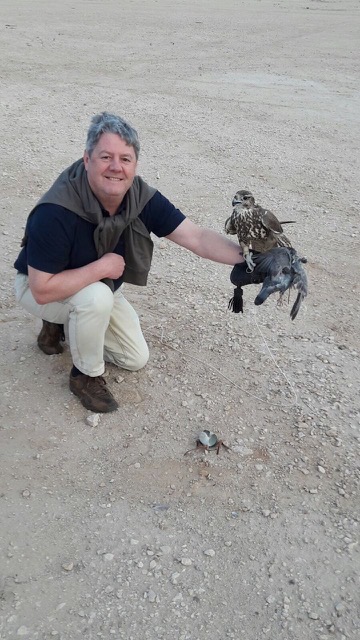
- Participants will be able to
- Participants will be able to
- Participants will be able to
Bio:
D- Soft Leadership Skills:
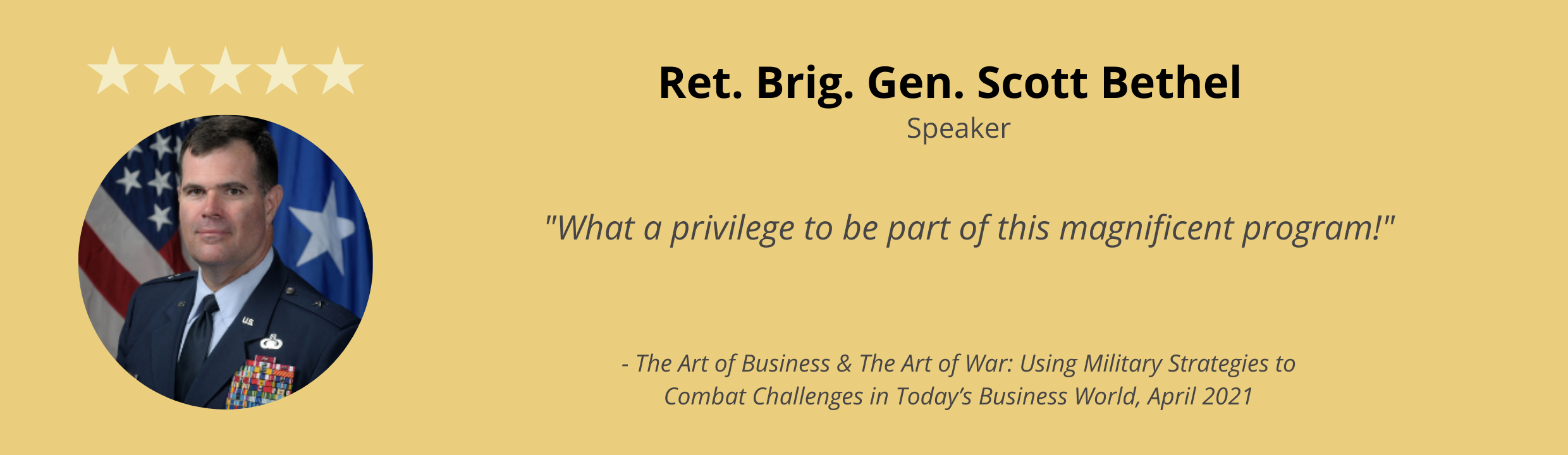
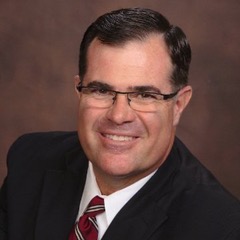
7- June 27: Scott Bethel, Brigadier General, USAF (Ret.); Founder and CEO of IntegrityISR; Former Vice Commander, Air Force ISR Agency (AFISRA); Former Senior Drone Operations Director and Analyst and the Air Force’s Senior Targeteer; Former Commander for the Training of All DoD Intelligence Personnel; Master’s Degree in Strategic Intelligence from the Defense Intelligence College.
[ISR: Intelligence, Surveillance, and Reconnaissance]
 Title: Leading like a General – Military Leadership Principles for the Modern Executive.
Description: This webinar focuses on the effective application of senior leadership principles of successful Generals. Participants will understand that being a senior military leader is not simply about giving orders and wearing cool uniforms. Instead, it’s about truly understanding that a General is at the top of a real team and the most successful ones know how to do four things well: Build a Team, Establish and Impart Vision, Manage in Crisis, and Conduct Effective Risk Management.
Learning Outcomes:
- Participants will be able to understand the principles of building a team including recruiting, training, and maintaining talent, putting the right person in the right position and creating an environment for cohesion;
- Participants will be able to understand how to create an effective vision statement;
- Participants will be able to differentiate between leadership in “peace” and “war” and be able to describe effective crisis management techniques;
- Participants will be able to understand and define risk, and to recognize the important components of Risk Mitigation.
Assessment:
- What are the key principles for effective team building?
- What are effective components of a vision statement?
- What are the expectations of a leader in normal daily operations and in crisis? How do they vary?
- What is the difference between order and discipline? How does an effective leader operate in both?
Bio: Scott Bethel is the Founder and CEO of IntegrityISR. He is a retired Air Force brigadier general with 33 years of senior leadership experience in small business development, business intelligence, strategic planning, organizational design, intelligence, information technologies and security, cyber, and education. His current focus areas are Cyber Operations, Strategy, Policy, Education and Training. In addition, he’s working on developing and mentoring small business through associations with accelerators in the US and Europe. He’s worked in both an advisory and training role with US and coalition partners including Saudi Arabia, UAE, Thailand, Poland, Pakistan, the Netherlands, Finland, and Mexico. As a consultant he has provided senior advice to a wide variety of government and commercial clients on Cyber, Data Management, Artificial Intelligence, Machine Learning, Electronic Warfare, ISR, Targeting and Operations. He’s also an Adjunct Professor at Angelo State University and serves on numerous Academic and Professional Boards. On active duty, he served as vice commander, Air Force ISR Agency (AFISRA), where he oversaw the organization, strategic planning, training and equipping of assigned forces to conduct ISR for the nation. He was the senior Drone Operations Director and Analyst as well as the Air Force’s senior targeteer. He has also served as a commander with responsibility for the initial training of all DoD intelligence personnel. In addition, he had various command and staff positions, including at Air Education and Training Command, as well as multiple deployments to combat areas. He has spoken and published extensively on business startups, ISR and cyber strategy and policy, future ISR systems, and modernization of processing, exploitation, and dissemination efforts.
Mr. Bethel has a master’s degree in strategic intelligence from the Defense Intelligence College and a bachelor’s degree in political science and history from Northern Illinois University. He was a national security fellow at Boston University. He is the author of numerous articles and is author of the book “Vladmir Vladmirovich Putin and Russian Foreign Policy for a New Millennium: A New Approach.”
B- Strategic Decision-Making:
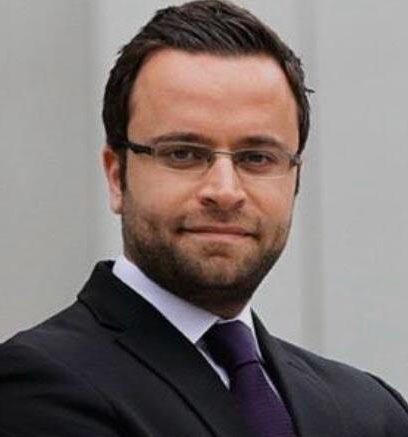
8- July 3: Rand Ghayad, Ph.D., Harvard Professor; Former IMF; Advised the U.S. Government and Multinational Corporations on Economic and Financial Matters, Including Anti-Money Laundering Statutes and Financial Crimes.
 Title: Game Theory & Business Strategy.
Description:
Learning Outcomes:
- Participants will be able to
- Participants will be able to
- Participants will be able to
Bio: Rand Ghayad, Ph.D., is an expert on a broad range of economic issues, including unemployment and job creation, debt management, political economy, investment reform, as well as economic challenges facing low income and fragile states. He brings more than 12 years of experience as an economist, holding positions in federal government, consulting, international organizations, and academia. Rand has been a faculty member at Harvard University since 2015. He also spent four years with The Brattle Group where he advised the U.S. government and multinational corporations on economic and financial matters, including anti-money laundering statutes and financial crimes. Between 2012 and 2013, Rand was part of an ongoing effort at the White House to develop best practices for hiring and recruiting the long-term unemployed. In 2014, Rand advised the Prime Minister and Employment Policy Council of France on strategies to reduce the incidence of long-term unemployment. He also advised various governments on job-driven training programs, including most recently the UK, U.S., Qatar, and Kuwait. Rand began his career at the Brookings Institution working on unemployment and labor market reforms. He also served in various positions at the Federal Reserve Bank, International Labor Organization, MIT, and UNDP.
Rand Ghayad is the author of “The Jobless Trap”, a manuscript that has been widely cited in leading academic journals and media outlets, including the Financial Times, Foreign Affairs, New York Times, Wall Street Journal, and The Washington Post. His work was also used and cited in congressional testimonies and conferences by Nobel Laureates, including Peter Diamond and Paul Krugman. Rand’s work uncovered new facts which offered a new explanation for why the unemployment rate did not go back to its normal level since the end of the Great Recession. Based on this research, President Obama issued several executive actions to give the long-term unemployed a fair shot. The findings from his work were also the backbone to several anti-discrimination laws enacted at the State level to protect job seekers against unemployment discrimination.
Rand holds a Ph.D. in Economics, three Master’s degrees in Finance, Public Policy, and Economics, and an undergraduate degree from Beirut. He held research and teaching positions at Harvard University, Massachusetts Institute of Technology (MIT), Boston University, and Northeastern University.
A- Strategic Planning:
9- July 10: Annie Patenaude, US Army, Retired Officer; Managing Director, AMP Analytics; Former Principal, Booze Allen Hamilton; Former Director, Office of the Deputy Under Secretary of Defense (Readiness); Former Assistant Professor of Mathematics, United States Military Academy.

Title: Military Planning Process Applied to Business Strategies: How Can You Create a Cyclic Analysis Framework to Better Meet your Business Goals?
Description: Military planning is methodical and rigorous, whether the planning is at the Strategic, Tactical, or Operational level. It is mission-focused, and has to be comprehensive, with effective and efficient use of resources available. Once the plan is executed, military leaders assess what went well and what could be improved. Using this framework, business leaders can organize around their business mission and goals, and align their strategies and actions to best achieve their success.
Learning Outcomes:
- Using a basic framework in military planning, participants will be able to align that to a business strategy that includes elements of planning, execution, and assessment.
- Participants will be able to utilize this framework to assess mission and goals and turn those into traceable/measurable objectives and actions.
- Participants will be able to review how the military uses after action reviews to evaluate actions and adjust business objectives to better meet mission and goals.
Bio: Annie Patenaude is a retired Army Field Artillery Officer and Mathematician. After her initial Army operational assignments, Annie taught Mathematics at West Point and served in Operations Research positions in the Pentagon.
Annie’s other work experience includes:
-
- SAIC, lead for modeling and simulation policy support to several offices in the Pentagon. Wrote landmark study in reuse of simulations used in the acquisition process led to the adoption of Simulation-Based Acquisition, and subsequently use of Simulation Support Plans.
- Northrop Grumman in the business development organization as an Executive Account Manager, and later Strategic Plans and Programs.
- Director of the Joint Assessment and Enabling Capability in the Office of the Deputy Under Secretary of Defense (Readiness), one of the three facets of Training Transformation. Working with leadership in the Joint Forces Command and the Military Services, designed and implemented a joint training analysis framework, developing metrics and feedback mechanisms toward increasing joint training effectiveness and efficiency,
- Principal in Booz Allen Hamilton. Key asset in the capability service areas of modeling and simulation (M&S) and operations research analysis with specific expertise in integrated Live, Virtual, and Constructive Simulation practices and policies for the US Department of Defense.
Currently, Annie works through AMP Analytics as an independent consultant to small businesses and Federally Funded Research and Development Centers, supporting Army, Navy, Homeland Defense, and Department of Defense clients in studies and analysis including strategic planning, enterprise M&S solutions, and operations research analysis.
She has subject matter expertise in Modeling and Simulation Policy, Test and Evaluation, Training Assessments, Operations Research Analysis, and Strategic Planning. Annie is a Fellow of the Society in the Military Operations Research Society. She also serves as the Operations Director for the Interservice/Industry Training, Simulation, and Education Conference. She holds a Bachelor of Science and a Masters of Arts degree in Mathematics.
A- Strategic Planning:
10- July 11: Matthew S. A. Feely, Ph.D., Captain, U.S. Navy (Ret.); Faculty Instructor, United States Army War College; Adjunct Assistant Professor, Columbia Business School, Columbia University.
Title: Utilizing the Wisdom of the Workforce for Strategic and Operational Success.
Description: Executives of businesses, government agencies, and non-profit organizations often claim that their most important asset is their people, their workforce. Yet, workforce members across the public and private sectors representing for-profit and not-for-profit businesses just as often complain that they are taken for granted, that their concerns are forgotten, and that their expertise is all but ignored by the very executives who proclaim how much they value the workforce.
Research shows that ignoring the considerable wisdom of the workforce can – and does – place the organization at risk of competitive disadvantage or general irrelevance, especially for organizations that face complexity – complexity that overwhelms the decision-making ability of even the most cerebral, most practiced, most capable senior executive(s).
Complexity demands distributed decision-making, where even important, strategic decisions be pushed to middle managers and maybe even to the artisans, the line workers, the customer service representatives – whom, while perhaps not having the vast degree of experience that C-suite executives have, are in the position to understand even the most nuanced changes in the environment and the customer response to them – in real time.
This webinar explores two frameworks which make acknowledge the need to leverage the capacities of the broader workforce. The two frameworks are provided by luminaries whom, though they represent two very different pathways to prominence, share some fundamental ideas about the need to harness the wisdom of the workforce.
The webinar will study Ron Heifetz’s notion of Adaptive Leadership. Professor Heifetz, a lecturer at Harvard’s Kennedy School, was among the first theorists to proclaim and popularize acceptance of the need – and a method – to push decision-making to the lowest possible levels of a given organization.
We will also study General Martin Dempsey’s concept of Mission Command, a framework that the U.S. military uses as its notion of “Command and Control.” Dempsey, a former Chief of Staff of the U.S. Army and Chairman of the Joint Chiefs of Staff, the most senior military officer in the U.S., developed the Mission Command framework in 2012 as a recognition that the traditional command and control method, which relied upon a strict hierarchical protocol and which presupposed the commander would direct forces in the field, was no longer viable in today’s increasingly complex, some would say “impossibly complex,” battle space.
Both models offer the business executive important perspectives, and each model is complementary to the other and thus, particularly helpful to study simultaneously.
Learning Outcomes:
- Participants will be able to identify the principal benefits of and steps to implement Adaptive Leadership;
- Participants will be able to identify the principal benefits of and attributes of Mission Command; and
- Participants will be able to conceptualize how to apply the concepts from the frameworks to their own organizations.
Bio: Matthew S. A. Feely joined the faculty at the Columbia Business School in May 2013, teaching strategic leadership and leadership decision-making to emerging leaders in the MBA and Executive MBA programs as well as to senior executives in the Crisis Leadership Executive Program and Advanced Management Program. Matt is also a faculty instructor at the United States Army War College where he leads two, year-long seminars of senior military officers in graduate studies to help them emerge as the next generation of strategic thinkers and leaders, applying their craft in a volatile, uncertain, complex and ambiguous world.
His work in the classroom and lecture halls exemplifies a fusion of theoretical knowledge with practical experience gained from a robust scholarship coupled with a three decade-long navy career and recent problem solving work he has done on behalf of the private sector, the United States defense establishment and political campaigns. Matt’s case study about his experiences leading relief operations after the Great East Japan Earthquake earned the distinction of being the first Columbia University case study ever to be published as a paper case and as a multi-media case study.
Matt earned a B.S. at the U.S. Naval Academy, an MBA at the Wharton School and a Ph.D. in Decision Sciences at the Wharton School’s Center for Risk Management and Decision Processes and the Center for Energy and the Environment, University of Pennsylvania. He is also a distinguished graduate of the National Defense University.
D- Soft Leadership Skills:
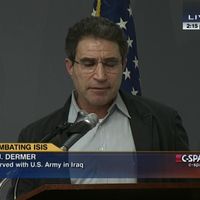
11- July 17: PJ Dermer, Colonel, US Army (Ret.); One of the Army’s Foremost Middle East Regional Experts; Former Senior Advisor, Office of the Vice President of the USA, 2002 – 2003; Advised, Mentored and Wrote Extensively for the Nation’s Senior Military and Civilian Leadership; Operationalized National Level Strategy in the Middle East.
 Title: Conflict resolution?
Description:
Learning Outcomes:
- Participants will be able to
- Participants will be able to
- Participants will be able to
Bio: Colonel (retired) P.J. Dermer is one of the Army’s foremost Middle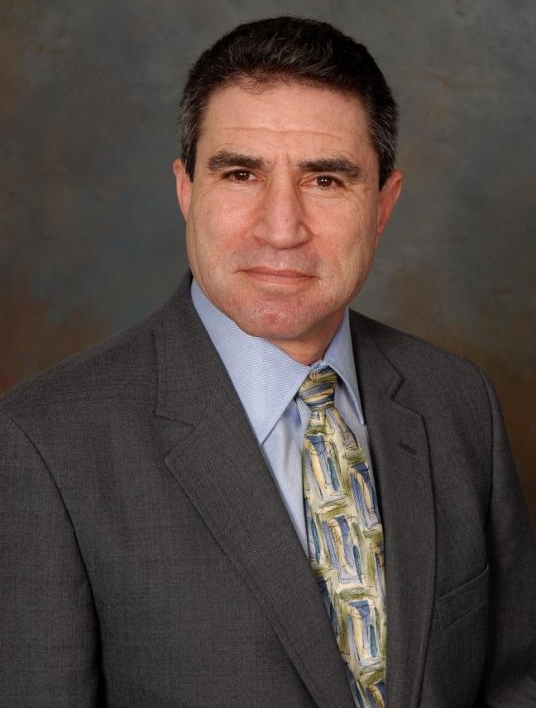 East regional experts. His career spanned over 30 years of experience. It includes military and civilian arenas spread over a wealth and breadth of challenging spectrums including national levels of the U.S. government and vital international venues. He has extensive coalition-building experience working with international counterparts to foster the Middle East Peace Process as well as the rebuilding of Iraq’s critical national security institutions. He has advised, mentored and written extensively for the nation’s senior military and civilian leadership. In the conduct of his duties, Colonel Dermer had the unique opportunity to operationalize national level strategy on the ground in the Middle East’s extremely complicated social, cultural and religious environment. Countries of expertise include Israel, Lebanon, Syria, Egypt, Iraq, North Africa and the Persian Gulf.
12- July 18: Francis H. Kearney III, Lieutenant General, US Army (Ret.); President of Inside Solutions LLC; Former Senior Special Operations Forces Commander, Center for Naval Analysis; Former Deputy Director for Strategic Operational Planning, National Counter-Terrorism Center.
Title: ?
Description: ?
Learning Outcomes: ?
Bio: Lieutenant General Frank Kearney retired on 1 January 2012 from the United States Army after more than 35 years of service. His final active duty assignment was Deputy Director for Strategic Operational Planning at the National Counter-Terrorism Center in Washington DC. General Kearney now serves as the President of his own consulting company, Inside-Solutions-LLC focusing on leader development in organizations. Most recently he served as the Interim CEO and President of Draper Laboratories in Cambridge MA from March to mid October 2020.
He works routinely with Thayer Leadership at the Thayer Hotel at West Point, NY and with military and corporate groups to assist in improving organizational performance through leader development. In this capacity he has worked with leaders in 7-11, Deloitte, Mercedes-Benz USA, General Electric, USAA, Novartis, Madison Square Garden, China-Europe International Business School, Morgan Stanley, Lord Abbett, BorgWarner, Synchrony Bank and many others. General Kearney serves as the Chairman of the Advisory Board for Team Red, White and Blue, a non-profit that helps reintegrate wounded warriors into their communities through physical and social activities, as well as on the Board of Directors for Draper Laboratories, and the advisory boards for Red Gate Group, Xtreme Precision Firearms, Reperi, Westport Construction, and Academy Securities.
General Kearney is a routine speaker on Terrorism, Interagency, Defense and Security issues. He was a congressionally appointed member of National Defense Panel to assess scenarios, recommendations and conclusions for the 2014 Quadrennial Defense Review (QDR). General Kearney also serves as a Distinguished Faculty Member of the Joint Special Operations University at USSOCOM and as a mentor to the Department of State Foreign Service Institute in Washington DC. He is a Senior Special Operations Fellow at the Center for Naval Analysis, an FFRDC in Washington DC.
General Kearney is a 1976 graduate (BS) of the United States Military Academy and a 1985 graduate (MEd) of the University of South Carolina. He is a graduate of the US Army Command and General Staff College as well as the United States Army War College. He has served in operational and command assignments at every level with combat tours in Grenada, Panama, Bosnia, Iraq and Afghanistan, including combat parachute assaults into Grenada and Panama. General Kearney’s most recent assignments at the strategic and operational level focused on Special Operations and Counter-Terrorism. He planned and participated in the opening campaigns of Operation Enduring Freedom in Afghanistan and Operation Iraqi Freedom in Iraq and commanded all Theater Special Operations forces in the middle-east including OIF and OEF from March 2005 to June 2007. General Kearney also served as the Deputy Combatant Commander for United States Special Operations Command (SOCOM) from 2007-2010 and insured that the 62,000 operators of this command were properly trained and equipped for their global special operation’s missions. General Kearney oversaw the SOCOM requirements process, the execution of a 10 billion dollar budget and led the SOCOM Quadrennial Defense Review (QDR) team for the 2010 QDR.
General Kearney also sat on the DOD Ballistic Missile Defense Review Committee and the Deputy Secretary of Defense’s Advisory Working Group managing the Defense Department’s annual budget approval and execution. Finally, at the National Counter-Terrorism Center, General Kearney worked with 16-29 different cabinet level agencies in the US government to plan and coordinate the whole of government efforts to achieve the goals of the Obama Administration’s Counter-Terrorism strategy. His team coordinated key implementation plans against terrorist groups and assessed the efforts to achieve stated goals as well as provided input to the Office of Management and Budget on funding priorities for the national counter-terrorism budget.
Speakers:
- Gen. John Abizaid? Gen. Joulwan?
- Tom Ruby, Ph.D., Colonel, USAF (Ret.); CEO of Bluegrass Critical Thinking Solutions; Former Vice Dean, Air Command and Staff College.
- Tom Ruby, Ph.D., Colonel, USAF (Ret.); CEO of Bluegrass Critical Thinking Solutions; Former Vice Dean, Air Command and Staff College.
- Francis H. Kearney III, Lieutenant General, US Army (Ret.); President of Inside Solutions LLC; Former Senior Special Operations Forces Commander, Center for Naval Analysis; Former Deputy Director for Strategic Operational Planning, National Counter-Terrorism Center.
- Matthew S. A. Feely, Ph.D., Captain, U.S. Navy (Ret.); Faculty Instructor, United States Army War College; Adjunct Assistant Professor, Columbia Business School, Columbia University.
- Dean Dudley, Ph.D., Associate Professor of Economics at United States Military Academy, West Point.
- Debra Lewis, Colonel, US Army (Ret.), West Point’s 1st Class w/Women; Harvard MBA; Engineer who Led a $2.1B Construction Program in a Conflict-Ridden Combat Area; Founder of Mentally Tough Women, USA.
- Hon. Mark Kimmitt, Brigadier General, US Army (Ret.); Former Assistant Secretary of State, Political-Military Affairs, State Department; Former Deputy Assistant Secretary of Defense for Middle East Policy, United States Department of Defense/Pentagon; Harvard/West Point.
- Daylian Cain, Ph.D., Yale University; Award-Winning Faculty Member.
- Cal Astrin, Captain, US Navy, (Ret.); Capture Executive at Raytheon; Former Director, Business Development, Lockheed Martin; Former Nuclear Submarine Commander.
- Richard A. Stewart, Major, US Marine Corps (Ret.); Principal Consultant, KBR, Inc.; Author of “Sunrise at Abadan: The British and Soviet Invasion of Iran, 1941” (1988).
- Sedat Cevikparmak, Ph.D., Assistant Professor and Chair of Supply Chain Management Program, Division of Business, DeSales University; Infantry Battalion Commander, Aydin, Turkey; Turkish Army War College; BS in Foreign Area Studies (Middle East), the United States Military Academy, at West Point, NY; MS in National Security Affairs (Middle East), Naval Post-Graduate School, Monterey, CA.
- Hon. David Schenker, Senior Fellow, The Washington Institute for Near East Policy; Former Assistant Secretary of State for Near Eastern Affairs.
- Michael O’Hanlon, Ph.D. (Princeton University), Senior Fellow and Director of Research in Foreign Policy at the Brookings Institution; Co-director of the Center for Security, Strategy, and Technology; Adjunct professor at Columbia and Georgetown Universities; Lecturer at The George Washington University; Member of the International Institute for Strategic Studies.
- Scott Sagan, Ph.D.; Professor of Political Science; Senior Fellow at the Center for International Security and Cooperation (CISAC), Freeman Spogli Institute for International Studies, Stanford University.
- Kevin C. Holzimmer, Ph.D.; Professor of Comparative Military Studies at Air University’s Air Command and Staff College (ACSC); Former Professor at the US Air Force Research Institute and at the School for Advanced Air and Space Studies; Worked on Policy Concerns with Gen. David H. Petraeus’ USCENTCOM Joint Strategic Assessment Team; Conducted Fieldwork in Charting a U.S. Air Force Strategy Based Upon President Obama’s “Pivot to Asia” Speech; Ph.D. in Military History from Temple University.
- Jonathan Crawford, Managing Director & Owner, Calliance Ltd. for Security Risk Management and Hostage Incident Management Response and Training; Former Chief of Mobile Training, United Nations Department of Safety & Security (UNDSS); Former UN Focal Point for Kidnap & Hostage Incidents; Former Metropolitan Police Officer in the UK (Hostage Crisis Negotiation Unit).
- Scott Bethel, Brigadier General, USAF (Ret.); Founder and CEO of IntegrityISR; Former Vice Commander, Air Force ISR Agency (AFISRA); Former Senior Drone Operations Director and Analyst and the Air Force’s Senior Targeteer; Former Commander for the Training of All DoD Intelligence Personnel; Master’s Degree in Strategic Intelligence from the Defense Intelligence College.
- Rand Ghayad, Ph.D., Harvard Professor; Former IMF; Advised the U.S. Government and Multinational Corporations on Economic and Financial Matters, Including Anti-Money Laundering Statutes and Financial Crimes.
- Annie Patenaude, US Army, Retired Officer; Managing Director, AMP Analytics; Former Principal, Booze Allen Hamilton; Former Director, Office of the Deputy Under Secretary of Defense.
- Matthew S. A. Feely, Ph.D., Captain, U.S. Navy (Ret.); Faculty Instructor, United States Army War College; Adjunct Assistant Professor, Columbia Business School, Columbia University.
- PJ Dermer, Colonel, US Army (Ret.); One of the Army’s Foremost Middle East Regional Experts; Former Senior Advisor, Office of the Vice President of the USA, 2002 – 2003; Advised, Mentored and Wrote Extensively for the Nation’s Senior Military and Civilian Leadership; Operationalized National Level Strategy in the Middle East.
- Francis H. Kearney III, Lieutenant General, US Army (Ret.); President of Inside Solutions LLC; Former Senior Special Operations Forces Commander, Center for Naval Analysis; Former Deputy Director for Strategic Operational Planning, National Counter-Terrorism Center.
CLICK HERE TO REGISTER
TERMS OF SERVICE: We reserve the right, in our sole discretion, to reject or remove anyone who has registered or gained access under false pretenses, provided false information, or for any other action or behavior that we deem inappropriate, before, during or after the webinars, with or without prior notice or explanation, and without liability.
IMPORTANT DISCLAIMER: All rights reserved. The information on this page shall be considered proprietary information not to be used, copied or reproduced in any way. No part of our presentations/workshops/webinars may be reproduced, distributed, or transmitted in any form or by any means, including photocopying, recording, or other electronic or mechanical methods.
WEBINARS WITH THE
INTERNATIONAL FOUNDATION FOR WOMEN’S EMPOWERMENT